Which Cockroach Do You Have? Identify the Species Before Treating
"I saw a cockroach" tells you almost nothing. Depending on the species, the insect came from your kitchen, the sewers or the woodpile outside — and in one case out of five, there is nothing to treat at all.
In brief
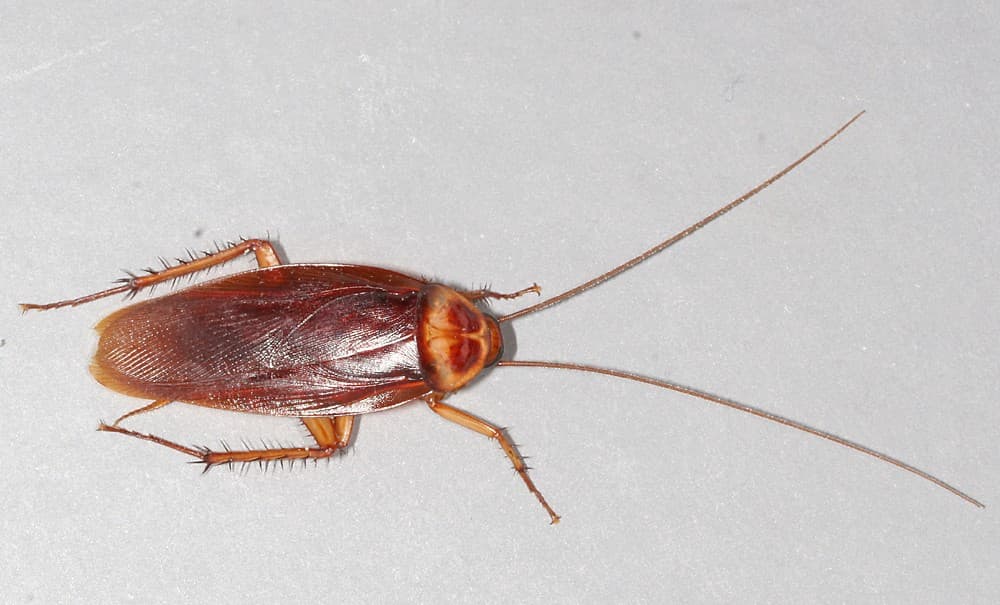
Five cockroach species are found in and around buildings in Quebec, and they share neither the same origin nor the same treatment. The German cockroach — 13 to 16 mm, light brown, with two dark parallel lines behind the head — is the only one that breeds heavily indoors: it is the real infestation, and it lives in the kitchen and bathroom. The Oriental cockroach, about 25 mm, nearly black and glossy, comes up from drains and damp basements. The American cockroach, up to 38 mm, usually signals a connection to the sewers or a boiler room. The brown-banded cockroach, rarer here, hides somewhere warm, dry and high up — treating only the kitchen misses it entirely. And the wood cockroach lives outdoors: it wanders in by accident in early summer, does not settle, and warrants no indoor treatment at all.
Why the species changes everything
Many people call us saying "I saw a cockroach." That is useful but incomplete — rather like saying "I heard a noise in the wall."
The species determines four things:
- Where the insect came from. Your home, the neighbouring unit, the sewers, or the yard.
- Where treatment must go. The kitchen, the basement drains, the building perimeter, or the upper parts of rooms.
- Whether it breeds in your home. That is the difference between an infestation that grows on its own and occasional visitors.
- Whether to intervene at all. Sometimes, no.
A treatment aimed at the wrong species does not just miss: it costs money and leaves the impression that "nothing works."
Three questions are enough
Before even naming the species, three observations do most of the sorting:
- What size? An insect the length of a long grain of rice (around 15 mm) is not the same problem as one the size of your thumb (35 mm and up).
- What markings? Two dark lines behind the head, two bands across the body, or no marking at all on a glossy black body.
- Where did you see it? Kitchen and bathroom, damp basement near a drain, or by a ground-floor window in June.
If you can, take a photo before squashing the insect — from above, with something for scale beside it, a coin for instance. That is what makes reliable identification possible remotely.
1. The German cockroach — the one that really matters
Blattella germanica. This is the species behind nearly every residential infestation in Montreal, and by far the hardest to eliminate.
How to recognize it. The adult is 13 to 16 mm long, tan to light brown, and carries two dark parallel lines running from the back of the head to the base of the wings. Those two marks are the most reliable sign: no other species here has them.
Where it lives. In the kitchen and bathroom — near the dishwasher, stove and sinks. It seeks warmth, moisture and food, and settles into narrow cracks: cabinet hinges, drawer slides, appliance motor housings.
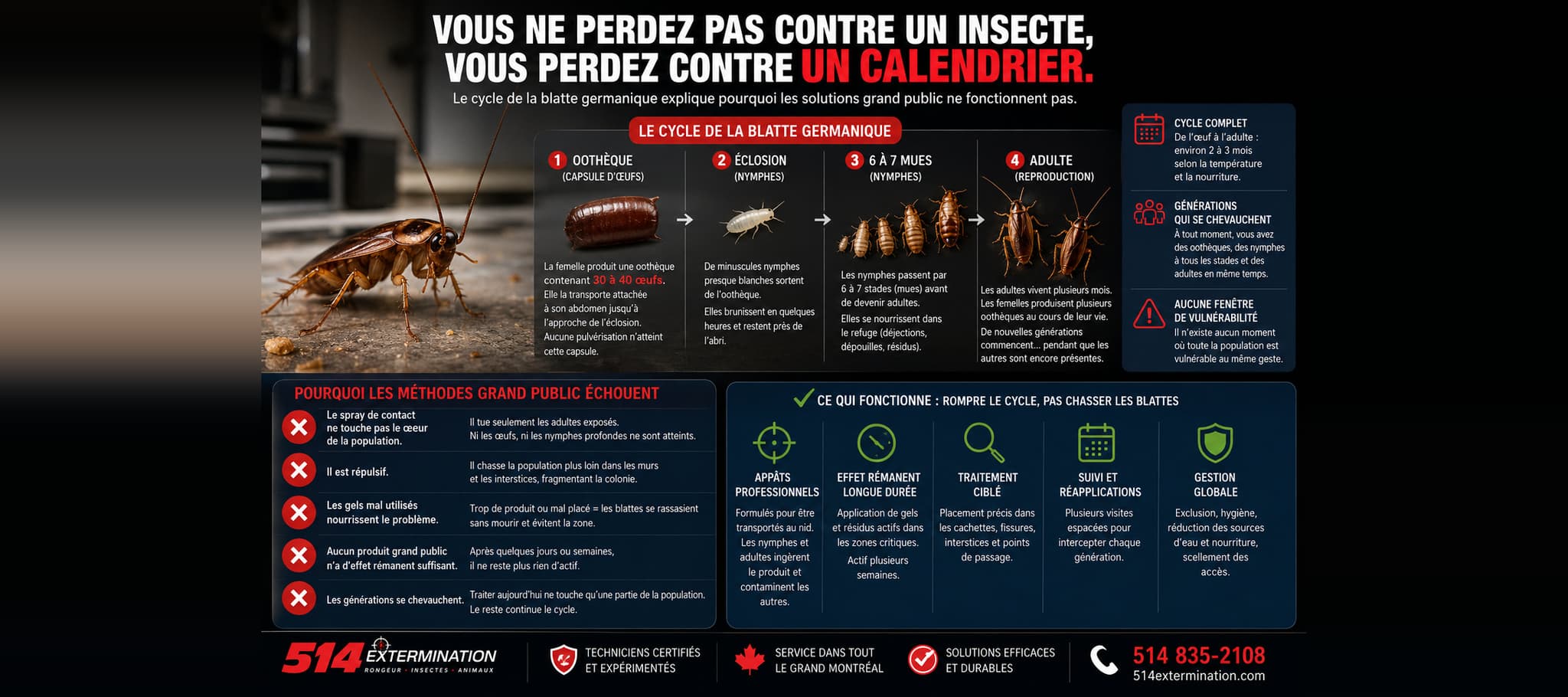
Why it is so difficult. The female produces an egg capsule — the ootheca — that can hold up to 48 eggs, and she carries it throughout the embryos' development, roughly 28 days, before depositing it in a sheltered spot shortly before hatching. The eggs therefore stay protected on the insect, out of reach of contact products, and generations overlap continuously. That is why cockroach treatment includes a follow-up visit: the oothecae present on treatment day hatch after the visit.
Where it comes from. It does not cross the yard to get in. It arrives carried: delivery cardboard, grocery bags, suitcases, second-hand appliances, used furniture. In apartment buildings it also travels through chases and shared baseboards.
Our article on the cockroach life cycle covers this biology, and the one on cockroaches in apartments explains why they come back in multi-unit buildings.
2. The Oriental cockroach — the damp basement one
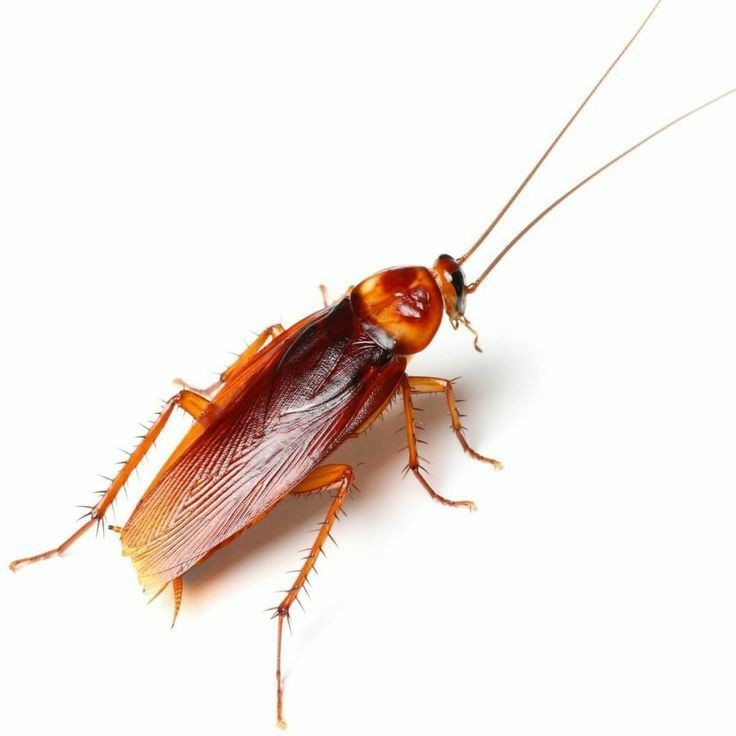
Blatta orientalis, often called the "sewer roach" or a "water bug."
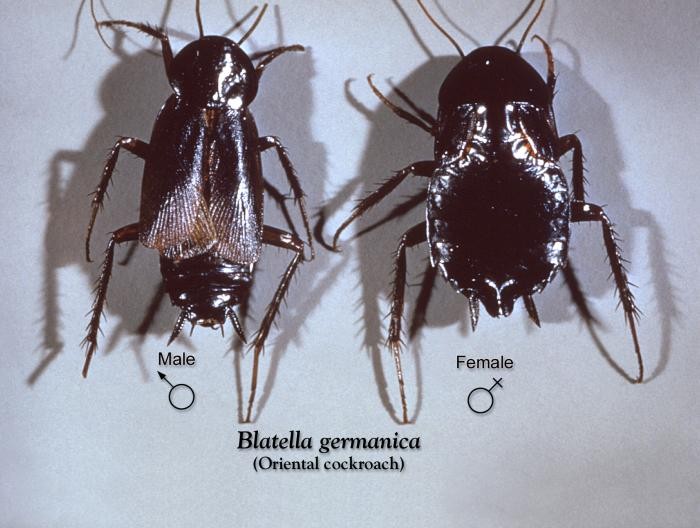
How to recognize it. Bigger and stockier than the German: about 25 mm. Very dark brown to nearly black, with a glossy, almost greasy look. It carries no lines or bands. The female has reduced wings that do not cover her abdomen; neither sex flies usefully.
Where it lives. In dark, damp and cool places: under sinks, behind washing machines, in damp basements, around floor drains and basement window wells. The exact opposite of the brown-banded.
What its presence means. It generally comes from outdoors or from the drainage system: up through a poorly trapped drain, a foundation crack, a crawl space. Finding it in the basement therefore points to a moisture and sealing problem as much as an insect one. Treating the kitchen never reaches it.
3. The American cockroach — the biggest
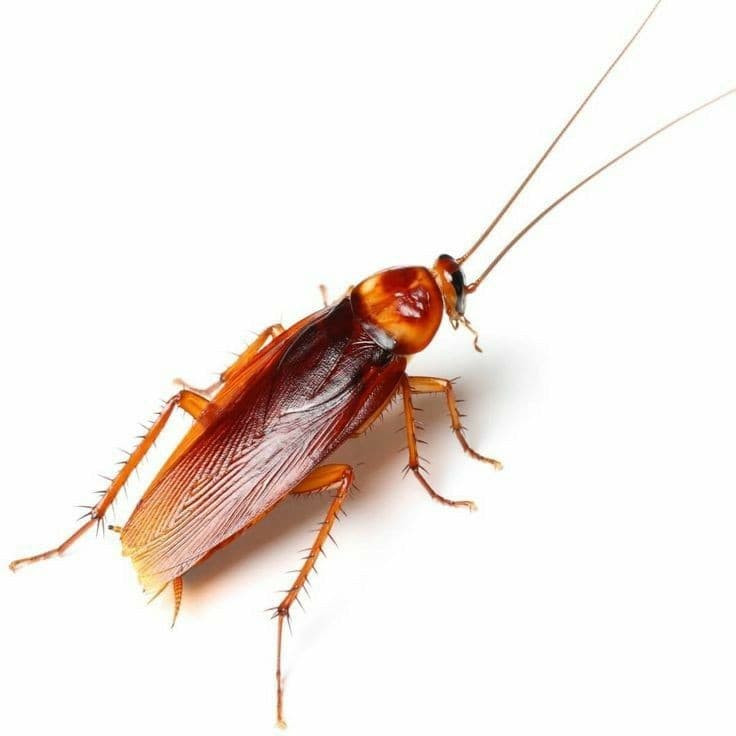
Periplaneta americana. The one behind the most alarmed phone calls, because its size is startling.
How to recognize it. The adult reaches about 38 mm — roughly the length of a thumb. It is reddish-brown, and its wings cover the entire abdomen.
Where it lives. It seeks heat and humidity: boiler rooms, warm crawl spaces, mechanical rooms, piping, and above all the sewers.
What its presence means. In a house it is rare and often turns up singly, through a drain or a pipe. In a building or a business, however, several individuals usually signal a connection to the sewer system or a shared boiler room — a building problem, not a unit problem. For a food establishment, see our article on what the inspector looks for.
4. The brown-banded cockroach — the one that hides up high
Supella longipalpa. Rarer in Quebec, but its behaviour makes it a case apart, and that is exactly why it is so often mistreated.
How to recognize it. The male is about 13 mm and light brown, with fully developed wings; he readily flies when disturbed. The female is shorter and stouter, and her wings do not cover the whole abdomen. The distinguishing feature is two broad brownish bands across the body, one at the base of the abdomen and one at mid-abdomen. These run crosswise — not to be confused with the German's two lengthwise lines.
Where it lives. This is the crux: it prefers warm, dry spots and tends to stay nearer the ceiling than the floor, away from water. You find it in refrigerator motor housings, the upper walls of cabinets, closets and dressers, behind picture frames, and inside clocks, radios, light switch plates and door frames. The female glues her egg capsules to walls, ceilings and hidden, protected areas.
The practical consequence. A treatment focused on the kitchen and bathroom — the right strategy against the German — misses it completely. It spreads through the whole home, bedrooms and living room included. It is one of the reasons identification always precedes application with us.
5. The wood cockroach — the one not to treat
Parcoblatta pennsylvanica, the Pennsylvania wood cockroach. Its range includes Quebec, and every year it causes needless alarm.
How to recognize it. 12 to 18 mm, light brown. The male has wings longer than his body and flies — in short bursts, without staying airborne long. The female has short wings that do not cover her abdomen and does not fly.
Where it lives. Outdoors. Under bark, in firewood piles, stumps, leaf litter and tree cavities.
How it gets in. By accident, mostly in late spring and early summer. These are almost always males drawn to light, coming in through a patio door or a torn screen — or individuals carried in with an armload of firewood.
And here is the key point: breeding populations virtually never establish indoors. The extension guidance is explicit: the interior of the house should not be treated.
How do you know it is this one? You see one or two, never a group; they turn up near windows and doors rather than in cupboards; they die quickly indoors; and you find no droppings in cabinet corners and no oothecae. What settles the case is not an insecticide: it is moving the woodpile away from the wall, rethinking exterior lighting near doors, repairing screens and sealing thresholds.
We say so plainly, including over the phone: in this situation, an indoor treatment would be money wasted.
Comparison table
| Species | Size | Telltale sign | Where | What it means |
|---|---|---|---|---|
| German | 13–16 mm | Two dark lines running lengthwise | Kitchen, bathroom | A real infestation, breeding on site |
| Oriental | ≈ 25 mm | Glossy black, no markings | Damp basement, drains | A moisture and sealing problem |
| American | ≈ 38 mm | Very large, reddish-brown | Boiler rooms, sewers | A connection to the building's systems |
| Brown-banded | ≈ 13 mm | Two bands across the body | Warm and dry, up high | Treating the kitchen alone misses it |
| Wood | 12–18 mm | Male's wings longer than his body, flies | Near doors and windows, early summer | Came from outside — no indoor treatment |
What people often mistake for a cockroach
A share of the insects people send us photos of are not cockroaches at all. The most common mix-ups:
- The ground beetle — a glossy black beetle found in basements in the fall. It resembles an Oriental cockroach, but it has hard wing covers forming a straight line down the middle of its back, and much shorter antennae. It is harmless and does not breed in the house.
- The carpet beetle — far smaller, with a rounded, mottled body. It does not run like a cockroach. Its presence points to textiles or a dry animal source, not the kitchen.
- The earwig — elongated and brown, but recognizable by the pincers at the end of the abdomen.
- The silverfish — silvery, teardrop-shaped, wingless, with three filaments at the rear and a wriggling gait.
- A young German cockroach — the nymphs are very small and almost black, which often gets them taken for a different insect. Look closely: the two dark lines are already there.
What you can do right now
- Photograph the insect from above, with a coin beside it for scale. A sharp photo beats ten descriptions.
- Note the place and the time. Kitchen at 11 p.m., basement near the drain, or living room in broad daylight in June: those three cases lead to three different species.
- Look for droppings — small black specks, like pepper grains — in cabinet corners, under the sink, behind hinges. Their presence separates an established population from a lone visitor.
- Set a few sticky traps along walls and behind appliances. They tell you the species, the numbers and, above all, where activity is concentrated.
- Do not spray consumer insecticide. Repellent products scatter a German cockroach population into the rest of the home and compromise the bait used afterward. Our article on consumer insecticides explains why.
How we work
Inspection always begins with identifying the species, because that determines everything else: where to apply, what to apply, and whether to treat the interior, the building perimeter or the drains.
Against the German cockroach, the method relies on many small gel bait deposits where the insect actually travels, combined with a growth regulator that stops nymphs from reaching adulthood. A follow-up visit is planned, because the oothecae present on treatment day hatch after the visit. The full reasoning is in our article on our treatment methods.
Against the Oriental and American cockroach, the work is as much about the building as the insect: drains, moisture, foundation cracks, pipe junctions.
And against the wood cockroach, we do not treat the interior.
For a free price estimate in Montreal, Laval, the South Shore or the North Shore, call us at (514) 835-2108 — you can send us your photo. The on-site inspection is billed and deducted from the price of the treatment if you go ahead.
Sources
- Penn State Extension, fact sheets German Cockroaches, Oriental Cockroaches, American Cockroaches and Brown-banded Cockroaches.
- LSU AgCenter, Parcoblatta pensylvanica, Pennsylvania Wood Roach — breeding populations rarely establish indoors and house interiors should not be treated.
- NatureServe Explorer, distribution of Parcoblatta pennsylvanica, including Quebec and Ontario.
Frequently Asked Questions
How do you recognize a German cockroach?
I saw a big black cockroach in the basement — is that serious?
A cockroach that flies — what is it?
Should you treat the house for wood cockroaches?
Why is treating the kitchen not always enough?
How do German cockroaches get into a clean home?
Need a professional exterminator?
Contact us for a free evaluation and a treatment plan tailored to your situation.