Scratching Noises in the Wall: How to Tell Which Animal You're Hearing
A scratching sound in the wall is not always a mouse. The time you hear it, where it comes from and the kind of sound are usually enough to tell — and a wrong diagnosis is costly, sometimes even in the eyes of the law.
In brief
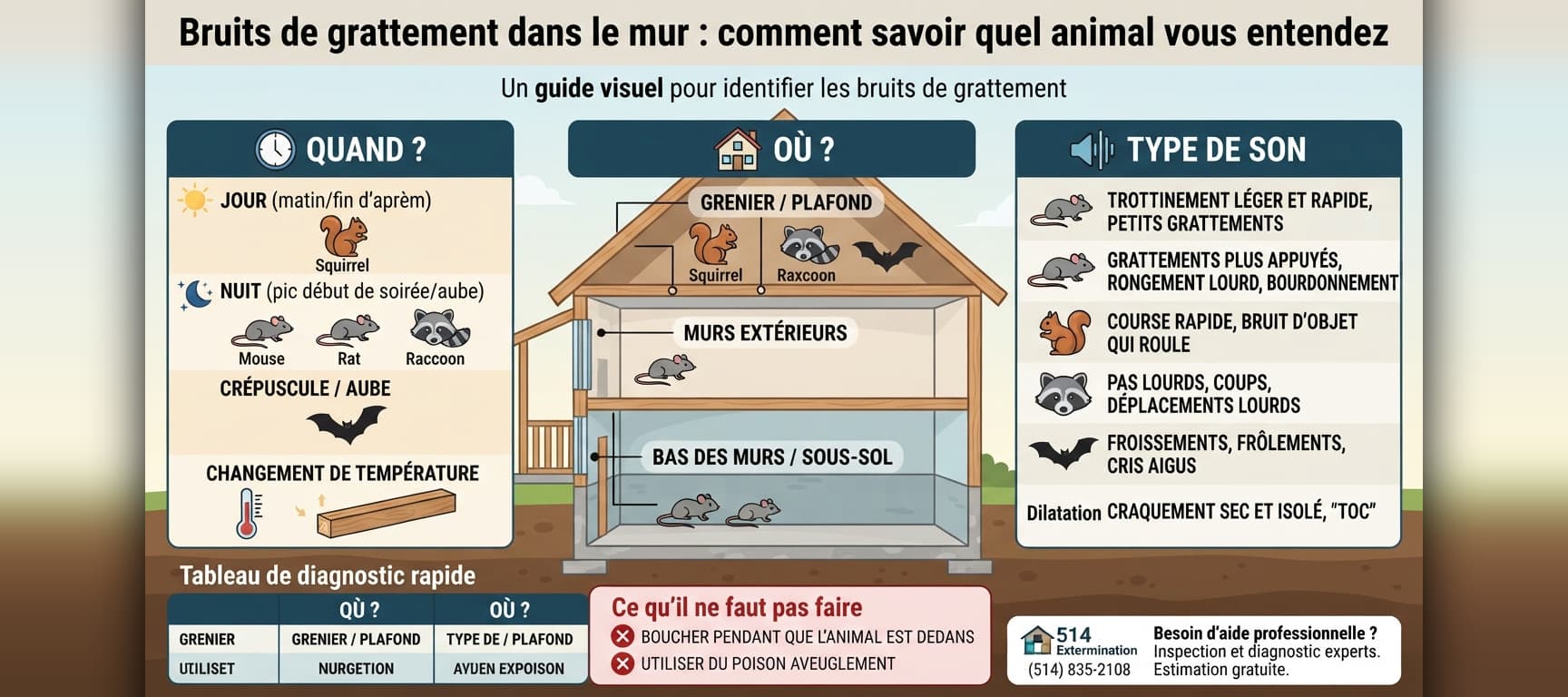
A scratching noise in a wall or ceiling is diagnosed with three questions: what time, where and what kind of sound. A noise during the day, especially early morning and late afternoon, coming from the attic, points to a squirrel. A light, quick patter at night, in the walls or near the kitchen, points to a mouse; heavier noises low in the walls or in the basement, to a rat. Heavy footsteps at night in the attic suggest a raccoon. Rustling at dusk and dawn can mean bats — a protected species in Quebec that it is illegal to kill. A faint, dry rustle at night may come from carpenter ants. And sharp cracks when the temperature changes often come from no animal at all: it is the expansion of building materials.
Why identification changes everything
The temptation is to react immediately: buy poison, plug a hole, set traps. But each animal calls for a different response, and several common responses are counterproductive or even illegal:
- Mouse poison does nothing against a squirrel — and a poisoned rodent often ends up dying inside the wall.
- Closing a raccoon's entry in spring can lock babies inside the attic.
- A bat may belong to a threatened species in Quebec that it is illegal to kill.
- Carpenter ants are not treated with a trap.
Before acting, take a few nights to observe. Three questions are usually enough.
Question 1: what time?
This is the most telling clue, because each animal keeps a distinct activity rhythm.
- During the day, especially at sunrise and late afternoon: red or grey squirrels, birds nesting in a vent.
- At night, peaking in early evening and before dawn: mice, rats, raccoons, flying squirrels.
- At dusk and dawn specifically, in short bursts: bats heading out to hunt, then returning.
- When the temperature changes — the evening cooling, morning sun, the heating kicking in: material expansion, no animal.
Question 2: where is it coming from?
- Attic or top-floor ceiling: squirrels, raccoons, bats, flying squirrels — and mice, which climb very well.
- Exterior walls, mid-height: mice, travelling through vertical cavities.
- Low in the walls, basement, ground-floor joists: rats, which live lower than mice.
- Kitchen or bathroom walls: mice, drawn by warmth, water and food.
- Around a dryer or range-hood vent: birds or squirrels settled in the duct.
Question 3: what kind of sound?
- Light, quick patter, small scratches: mouse.
- Heavier scratching, audible gnawing, dull thuds: rat.
- Fast running and the sound of something rolling — a nut, an acorn: squirrel.
- Heavy footsteps, bumps, movement that almost makes the ceiling shake: raccoon.
- Rustling, brushing, small high-pitched squeaks: bats.
- A faint, dry rustle, like crumpled paper, audible only in a quiet room: possibly carpenter ants.
- A single sharp crack, sometimes a "tock": thermal expansion or plumbing.
The suspects, one by one
The mouse
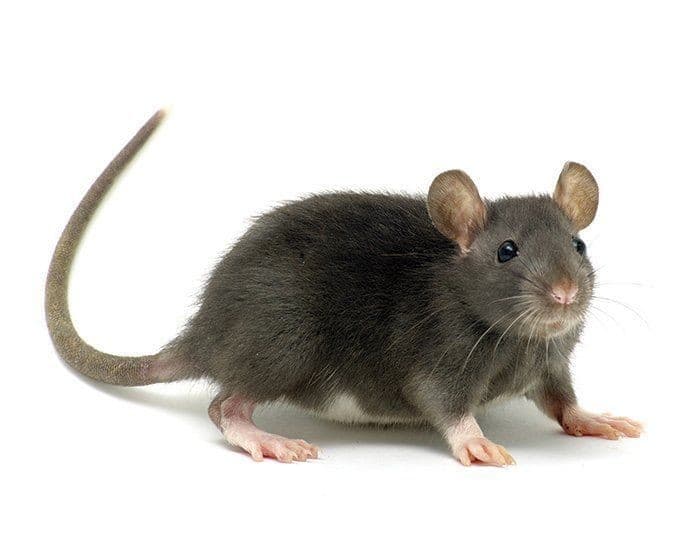
The most common cause in Montreal, especially from September to November as nights cool. It is active at night, moves through exterior wall cavities and climbs easily up to ceilings. A mouse gets through a 6 mm opening. To confirm, look for black droppings the size of a grain of rice behind appliances and under the sink. Our article on mice in the walls covers the seven signs that do not lie.
The rat
In Montreal this is essentially the Norway rat, an animal that lives low: basement, crawl space, bottom of walls, ground-floor joists. Its noises are heavier than a mouse's, and the gnawing is clearly audible. Its droppings are much larger. Our article on rats in Montreal explains why reports are rising.
The squirrel
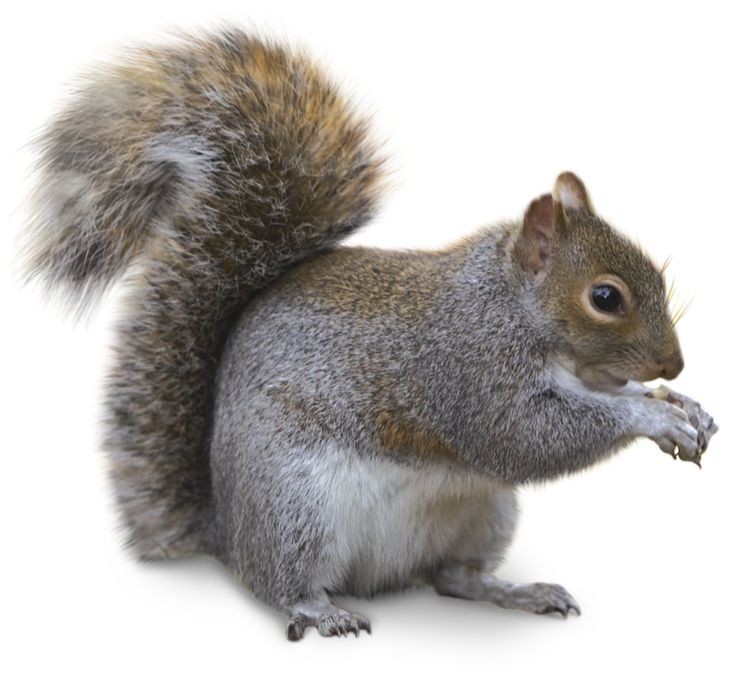
The giveaway is the time: a noise in the attic in broad daylight, especially early morning and late afternoon, is almost always a squirrel. It gets in through soffits, roof corners and vents, often by enlarging an existing gap. You hear it running, scratching, and sometimes rolling whatever it has stored.
The flying squirrel
The case that fools most people: a squirrel noise… at night. Quebec has two flying squirrel species, the northern and the southern, both nocturnal and rarely seen. If they settle in an attic, you hear them after dark. Note: the southern flying squirrel is listed in Quebec as a species likely to be designated threatened or vulnerable. It is dealt with by exclusion, not elimination.
The raccoon
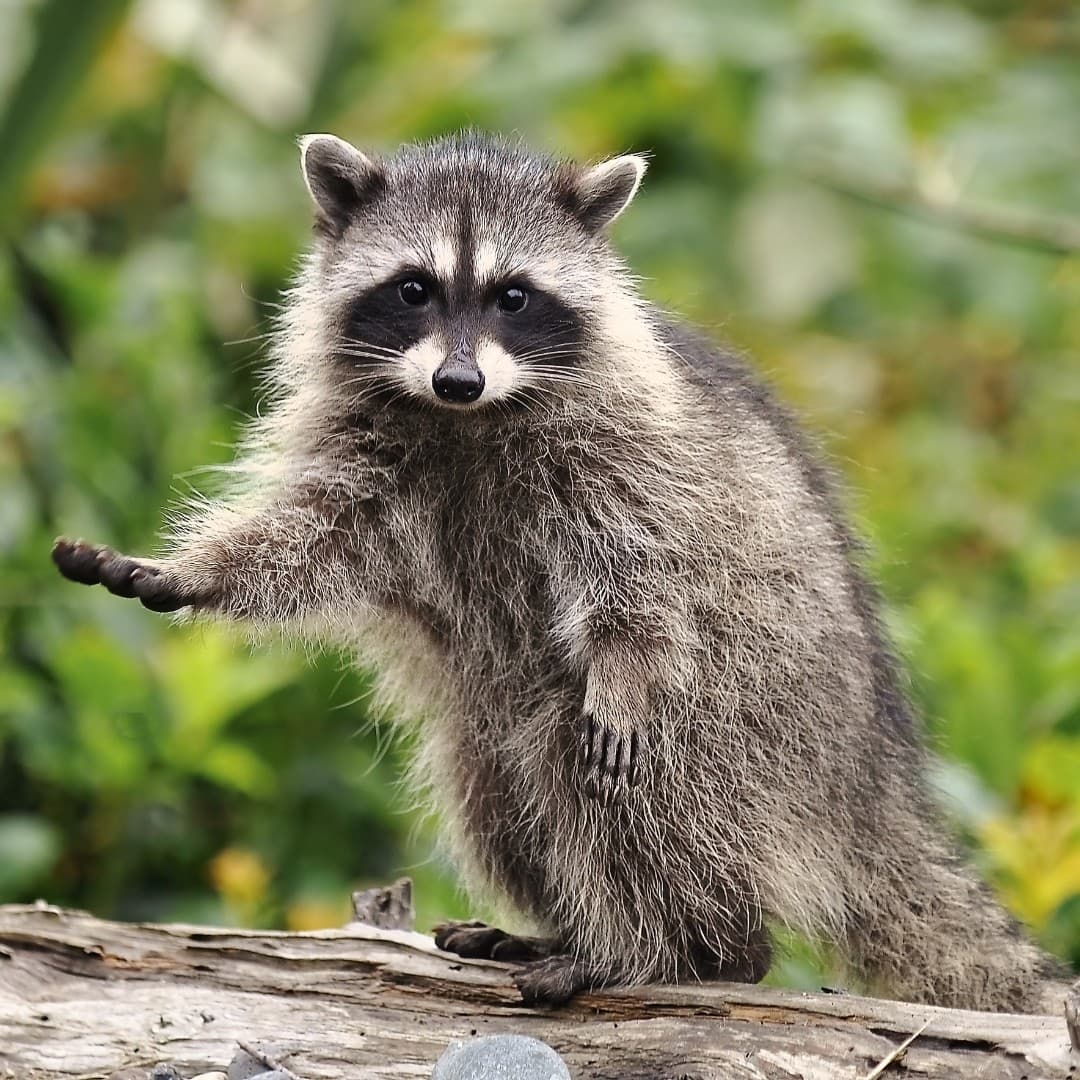
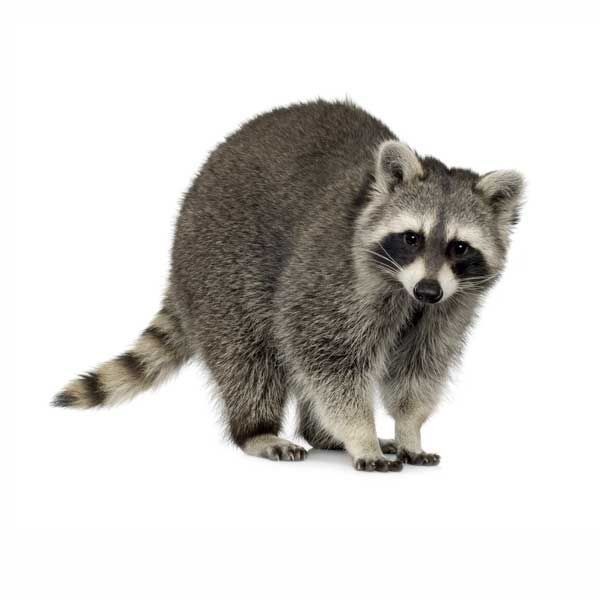
Impossible to mistake for a mouse: the noises are heavy, sometimes like someone walking in the attic. It is nocturnal. In spring, chittering and high-pitched cries almost always mean a mother with her young — which is why a raccoon entry is never closed without checking inside first. See our article on raccoons in the attic.
The bat
Rustling, brushing and small high-pitched squeaks, concentrated at dusk and dawn, when the animals head out to hunt and then return. They are found in attics, behind exterior siding or in chimney spaces. Small, dry, crumbly droppings piled under an entry point — guano — confirm their presence.
This is the case where the legal framework weighs most. In Quebec, the little brown bat is designated a threatened species under the Act respecting threatened or vulnerable species, and it is listed under the federal Species at Risk Act. Since white-nose syndrome reached Quebec in 2010, its populations have fallen by 78 to 100% depending on the area. The Quebec government says it plainly: killing them is illegal.
The only acceptable method is exclusion: locate the entry points and close them while leaving one-way exits that let the animals leave but not return. And timing matters: maternity colonies can gather hundreds of females with their young, and the birthing and rearing period runs from May 15 to August 15. Excluding during that window dooms the pups, which cannot yet fly, and sends the colony back to square one.
Never touch a bat with bare hands. All bats can carry rabies, and a bite can go unnoticed. If contact is possible, wash the skin for 10 to 15 minutes with running water and soap, then call Info-Santé 811.
Birds
During the day, especially in spring: chirping and fluttering in a dryer, range-hood or ventilation vent. The nest can block the duct — a safety problem for a dryer. A suitable flap or screen fixes it once the brood has left.
Carpenter ants
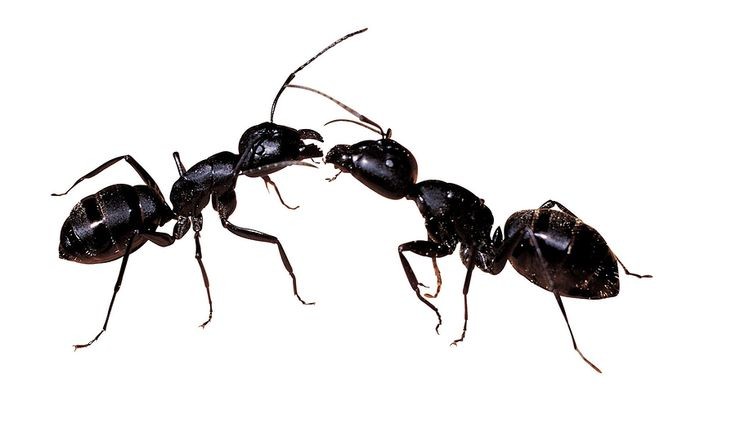
The most surprising suspect. When a large colony is established in a piece of wood, some homeowners describe a faint, dry rustle, like crumpled paper, audible at night in a quiet room. It remains a secondary sign: what actually confirms carpenter ants is frass — fine sawdust mixed with insect debris, pushed out of small openings in the wood. See our article on carpenter ant damage.
No animal: the house itself
A significant share of reported noises involves nothing alive:
- Thermal expansion: wood, metal and siding contract and expand with temperature. Single sharp cracks, typically in the evening as the air cools, in the morning when sun hits a wall, or when the heating starts.
- Plumbing: a hot water pipe expanding as it slides against a stud makes a regular tick-tick during and after use.
- Wind, rattling loose siding or a vent flap.
The test is simple: these noises follow temperature or water use, not the time of night.
The test to do yourself
A week of observation beats a hunch:
- Keep a log: date, time, room, type of sound. A pattern appears quickly.
- Tap gently on the wall when the noise happens. A rodent freezes, then resumes a few minutes later; expansion does not react.
- Dust a thin layer of flour in front of a suspect opening, in the basement or attic: the next morning's tracks tell you which animal it is.
- Walk around the house outside, at the height the noise comes from: soffits, roof corners, vents, cable penetrations, dryer vent. Look for gnaw marks and greasy rub marks.
- Do not go into an attic if you suspect a raccoon, especially in spring: a mother defending her young can be aggressive.
When the noise suddenly stops
People often take it as good news. It is not always. Three explanations are possible:
- The animal has left, for example a squirrel that moved on. But the opening is still there, and the next occupant will find it.
- The bats have left the building to hibernate elsewhere — a seasonal change, not a solution.
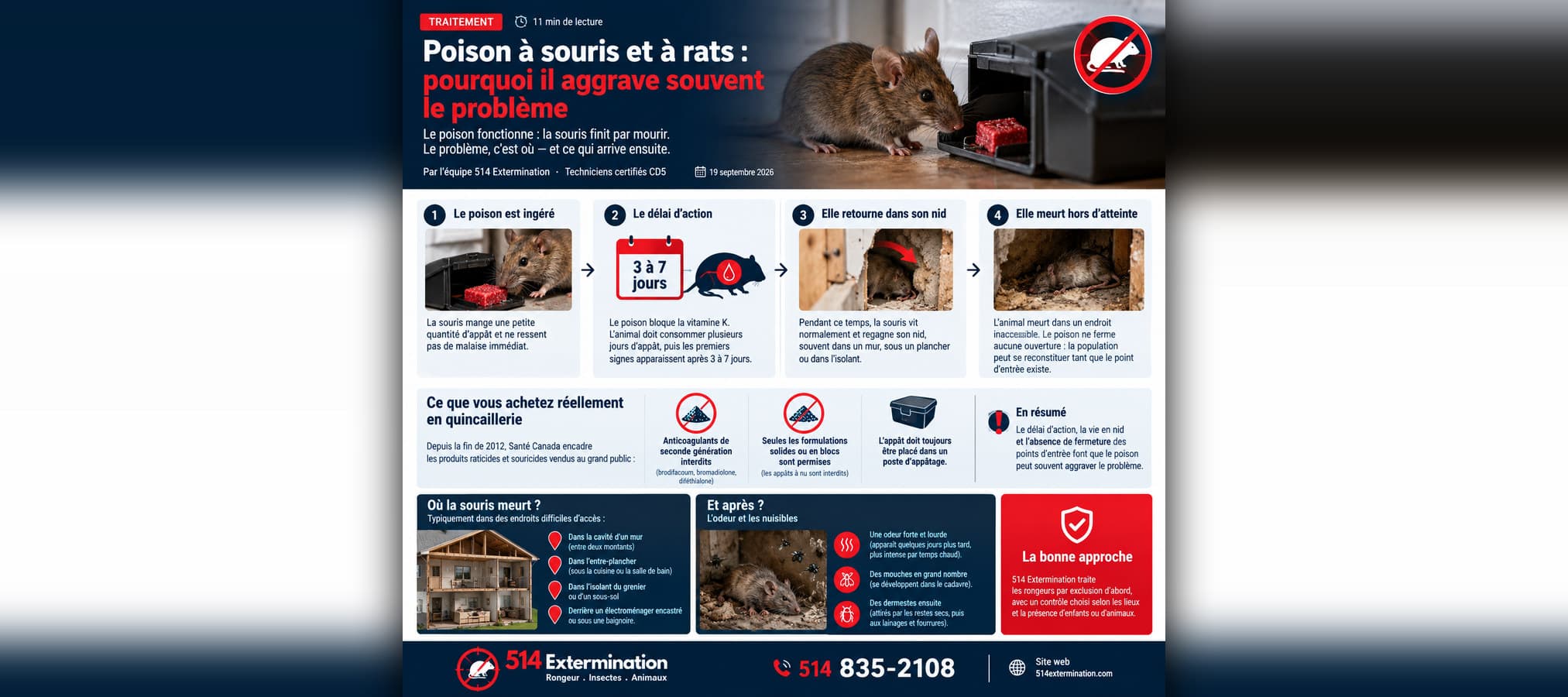
- The animal has died — typically after eating poison. In that case a smell appears a few days later. Our article on mouse and rat poison explains why this is so common.
What not to do
- Plug the opening while the animal is inside. It will chew toward the inside of the house, or die in the cavity.
- Put poison in the attic without knowing which animal it is.
- Try to remove a raccoon or bats yourself. The former can be aggressive and carry rabies; the latter are protected.
- Wait for winter. An animal that settles in during the fall has all winter to chew, nest and, for rodents, breed.
Diagnostic table
| Suspect | When | Where | Sound |
|---|---|---|---|
| Mouse | Night | Walls, ceilings, kitchen | Light, quick patter |
| Rat | Night | Low walls, basement | Heavier, audible gnawing |
| Squirrel | Day, morning and late afternoon | Attic, soffits | Running, rolling objects |
| Flying squirrel | Night | Attic | Like a squirrel, but at night |
| Raccoon | Night | Attic, chimney | Heavy steps; in spring, cries of young |
| Bat | Dusk and dawn | Attic, behind siding | Rustling, small squeaks |
| Birds | Day, spring | Vent ducts | Chirping, fluttering |
| Carpenter ants | Night, quiet room | Damp wood | Faint, dry rustle |
| Expansion | When temperature changes | Anywhere | Single sharp crack |
How we work
Every job starts with an inspection: identifying the animal, locating the entry points outside, assessing the extent. That is what determines the method — rodent control, wildlife exclusion with one-way doors, carpenter ant treatment or, sometimes, no treatment at all because the noise is coming from the house itself.
For wildlife — squirrels, raccoons, bats — exclusion is carried out in line with the biological calendar and the legal framework. An important point: there is no guarantee on wildlife after exclusion, because another animal can always try to get in through a new spot. The terms of our guarantee are published.
For a free price estimate in Montreal, Laval, the South Shore or the North Shore, call us at (514) 835-2108. The on-site inspection is billed and deducted from the price of the treatment if you go ahead.
Sources
- Government of Quebec, species profile Petite chauve-souris brune (little brown bat) — threatened status, prohibition on killing, maternity colonies.
- Government of Quebec, Preventing health problems caused by bats — what to do after contact, Info-Santé 811.
- Government of Quebec and Ministère des Forêts, de la Faune et des Parcs, profiles Petit polatouche and flying squirrels.
Frequently Asked Questions
How can you tell a mouse from a squirrel in the wall?
Why do I only hear scratching in the wall at night?
Can you get rid of bats in the attic yourself?
Do carpenter ants make noise in the walls?
The noise in the wall has stopped — is the problem solved?
Should you plug the hole the animal uses to get in?
Need a professional exterminator?
Contact us for a free evaluation and a treatment plan tailored to your situation.