Rats in Montreal: Why Complaints Jumped 70% — and What to Do at Home
Rat complaints rose 70% in two years in Montreal. Behind the numbers, three concrete causes — and a reality few property owners grasp: the City cannot solve this for you.

The numbers: a 70% rise in two years
Montreal's 311 service received more than 1,700 calls about rats in 2024, compared with roughly 1,000 in 2022. That is a nearly 70% increase in just two years.
The rise is not evenly spread. Between 2022 and 2024:
- Ville-Marie saw complaints more than double;
- Villeray–Saint-Michel–Parc-Extension also more than doubled;
- Côte-des-Neiges–Notre-Dame-de-Grâce more than tripled.
As for the rat population itself, estimates suggest around six million individuals across Montreal. Take that for what it is — an estimate, not a census — but it gives the order of magnitude.
Three concrete causes, and none of them is bad luck
1. Construction and the sewer network
This is the most underestimated factor. Sewer work and major excavations displace established colonies that had lived underground for years. Those rats do not disappear: they surface and look for new shelter within a few hundred metres.
We see this lag consistently in the field: every major excavation phase produces a wave of residential calls on adjacent streets, two to four weeks later. If a construction site opens in front of your home, that is the moment to have your perimeter inspected — not three months later.
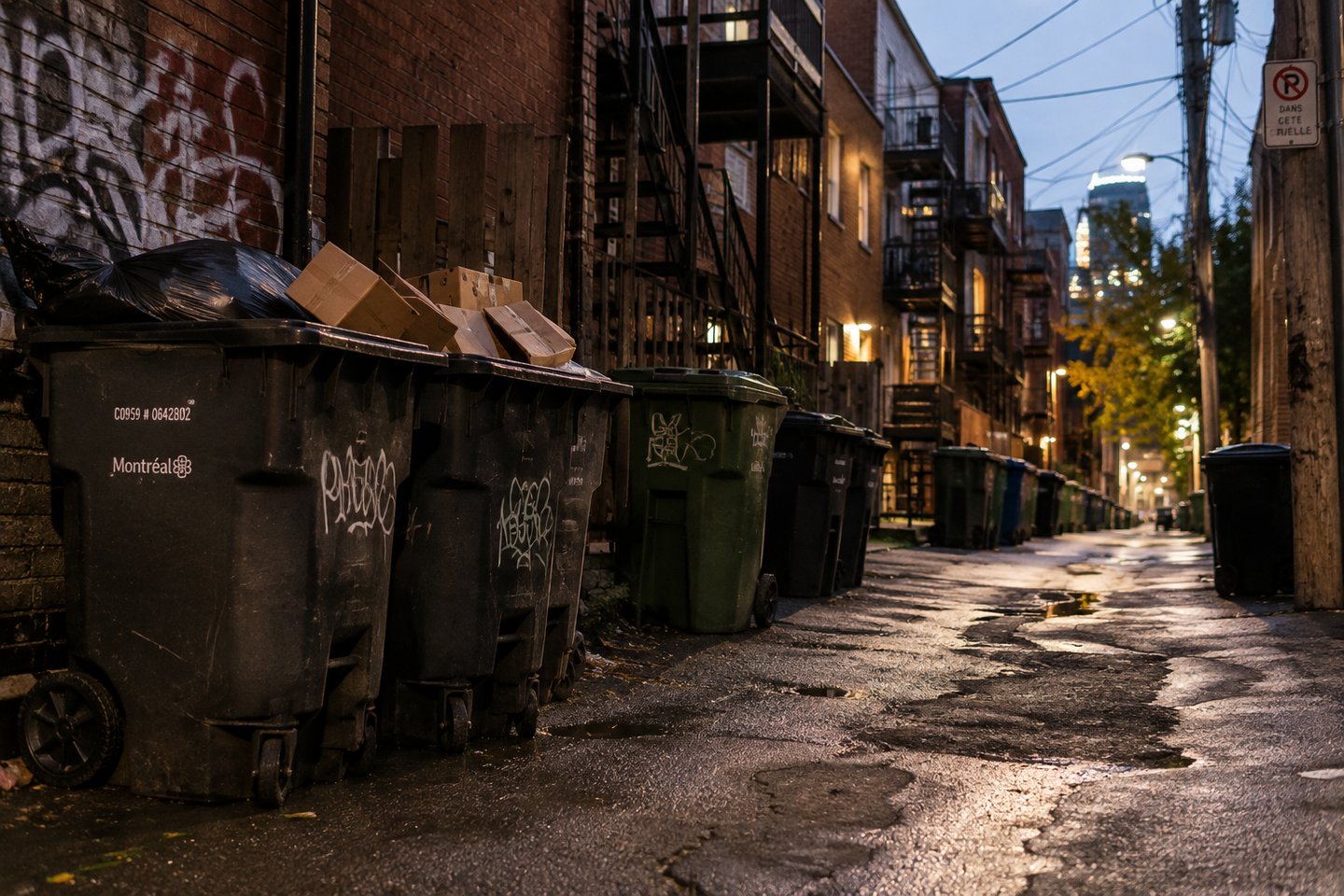
2. When the bins go out
Putting bins out the night before turns the street into an overnight buffet. Rats are opportunists: they settle not where there is room, but where food is reliably accessible. A single undisciplined building is enough to feed a colony that will affect the whole street.
3. Older building stock
Rats are more numerous in the city's oldest neighbourhoods, where aging sewers have cracks and failing joints. The stone foundations and half-buried basements of those sectors then offer entry points that time has widened.
Why the City will not solve this for you
This is what many property owners discover too late.
In Montreal, each borough is responsible for managing its own rat population. And municipal intervention capacity is limited by a simple constraint: traps and poison cannot be used in public spaces.
In other words, the City can act on structural causes — collection, sewers, construction rules — but it will not come and treat the burrow under your porch. A rat control plan adopted unanimously in 2023 has drawn criticism from the opposition for not having been implemented.
The practical consequence: on private property, the intervention is the owner's responsibility. Waiting for a municipal solution means letting the colony establish itself.
The signs that precede a visible infestation
Seeing a rat in broad daylight generally means the population is already substantial: rats are nocturnal and wary. Long before that, other signs appear.
- Droppings 1 to 2 cm long, shaped like an elongated grain of rice, often along walls.
- Dark grease trails along baseboards and pipes — rats always follow the same routes and their fur leaves a deposit.
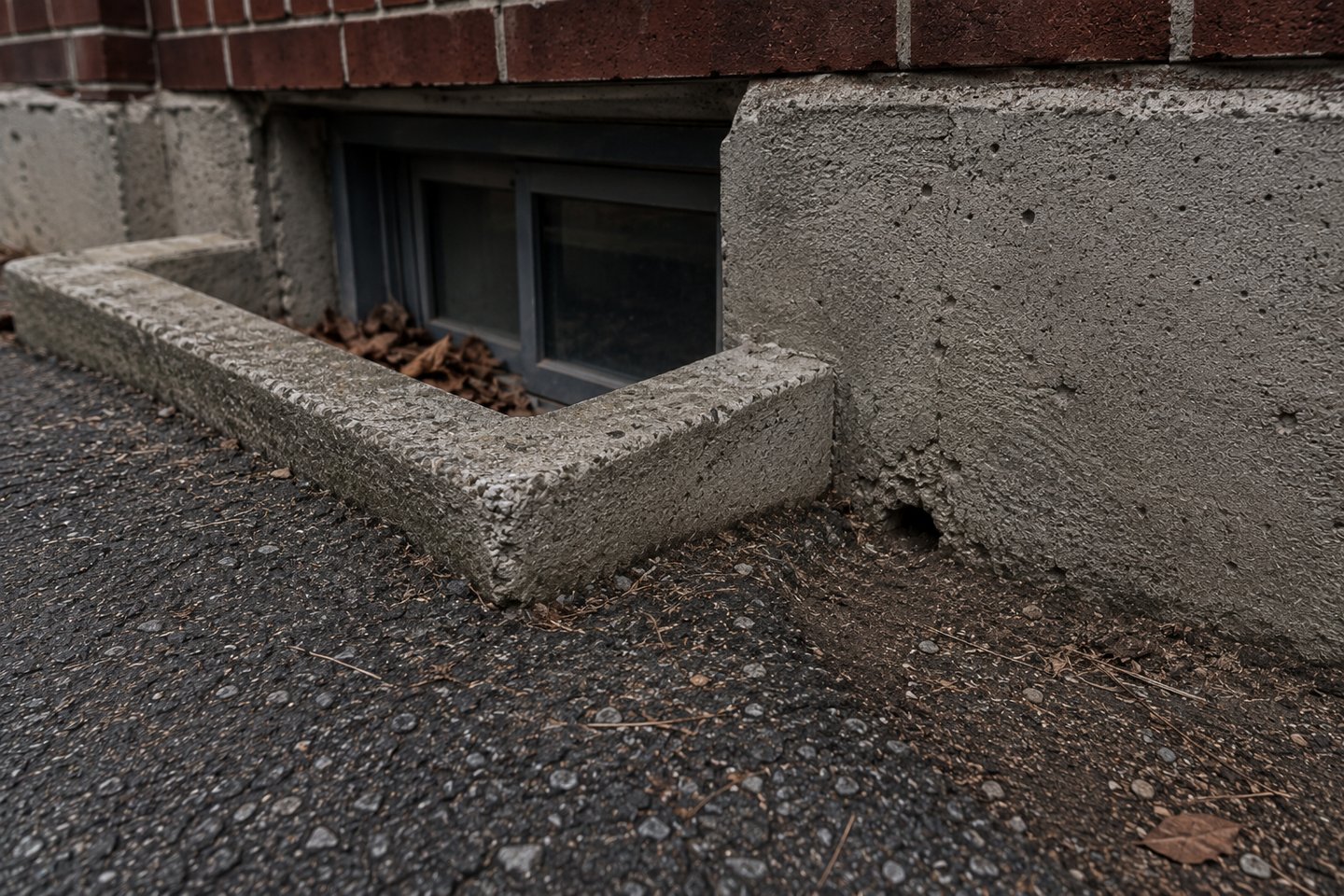
- Burrows 5 to 10 cm across near foundations, under porches, sheds or compost bins.
- Gnaw marks on wood, plastic and electrical wiring — the most concrete fire risk of an infestation.
- Scurrying sounds in walls or ceilings, especially at dusk and dawn.
Entry points to seal, in order of frequency
An adult rat gets through an opening the size of a two-dollar coin. Here is what we most often find on inspection:
- Basement window wells. In half-buried basements, the well forms a shaft the rat drops straight into. We screen them with 6 mm stainless mesh — the most cost-effective intervention, and the one least often requested unprompted.
- The slab-to-foundation junction, particularly at the attached garage.
- Unsealed pipe and cable penetrations, at both the water inlet and the sewer outlet.
- The bottom of garage and basement doors with worn seals.
- Foundation cracks widened by freeze-thaw cycles.
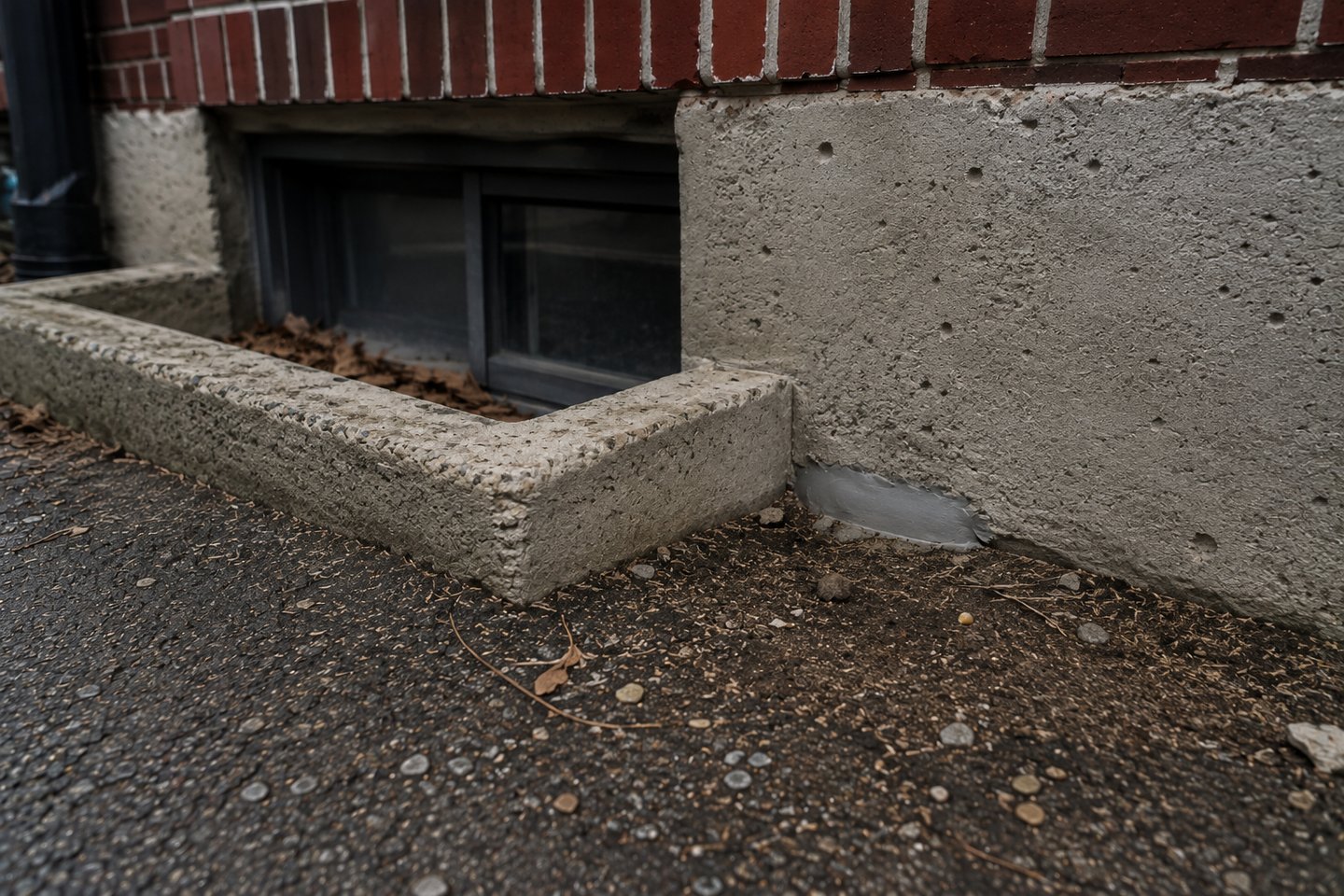
An important warning: never seal with expanding foam alone. A rat chews through it in one night. Sealing must combine a mechanical element — metal mesh, steel wool, sheet metal — with a sealant.
Why baiting indoors is never enough
This is the most common mistake, and it is expensive.
When the population reservoir is outdoors — banks, alleys, rail corridors, a burrow under a neighbouring porch — placing bait only inside the building merely removes the individuals that come in. The colony rebuilds as fast as it is thinned.
A treatment that holds combines three parts:
- The outdoor perimeter, with secured stations placed on actual travel routes, out of reach of children and pets;
- Physical exclusion of the building, which prevents recolonisation;
- Removing the food source — bin management, compost, bird feeders, pet food left outside.
Without the third part, the first two only move the problem next door. Our preventive exterior treatment guide details the perimeter barrier.
The special case of waterfront neighbourhoods
Along the river, the Lachine Canal and the Rivière des Prairies, the dynamic changes entirely. Open water does not freeze completely, which means there is no winter lull: the population stays active from January through March, unlike inland neighbourhoods.
On those properties we keep stations active year-round, where elsewhere we would pull them. It is a protocol difference that explains why a "standard" treatment often fails near water.
If you own a building
In a rental building, a rat infestation engages your responsibility for the dwelling's habitability, and the by-law concerning the sanitation, maintenance and safety of dwelling units prohibits vermin. A documented intervention is worth more than an intervention alone: a signed report stating the permit, the approved products and the areas treated protects you before a municipal inspector or the rental board.
Your obligations and our building protocol are detailed here.
Sources
311 complaint data and borough breakdown: Radio-Canada, Les plaintes pour présence de rats explosent à Montréal. Proliferation factors, borough responsibility and intervention limits in public spaces: same source, citing the City of Montreal and the municipal opposition.
Frequently Asked Questions
Why are there so many rats in Montreal right now?
Will the City of Montreal come and exterminate rats at my home?
Which Montreal boroughs saw the most rat complaints?
Can you plug a rat hole with expanding foam?
Why doesn't indoor bait solve the problem?
Need a professional exterminator?
Contact us for a free evaluation and a treatment plan tailored to your situation.