Bed Bugs: Why Home Remedies Almost Always Fail
Most of the long, expensive cases we handle started with two months of DIY attempts. Here, method by method, is what actually works, what merely scatters the colony, and why.
The instinct is understandable. The outcome, rarely.
Nobody calls an exterminator the day they find a bed bug. The first instinct is to handle it yourself: it is cheaper, immediate, and it avoids having to talk about it. We understand that instinct completely.
The problem is not DIY as a principle. The problem is that bed bugs have three biological traits that make nearly every home method ineffective:
- Eggs are immune to almost all contact products. They are glued into cracks, shielded by a shell, and they hatch 6 to 10 days later at room temperature. A method that only acts on the day you apply it lets the entire population restart.
- The insect survives months without feeding. "Not sleeping in the bedroom" does not starve them — it sends them looking for a host elsewhere, often next door.
- Pyrethroid resistance is well documented. That is precisely the chemical family found in consumer insecticides. Many populations now tolerate doses that killed them twenty years ago.
Here is what actually happens, method by method.
Foggers and sprays: the worst possible mistake
This is the best-selling and most damaging product. A fogger or contact spray mainly acts as a repellent: bed bugs flee the treated zone. They do not die — they leave the mattress and retreat deeper into baseboards, door frames, electrical chases and plumbing stacks.
In a Montreal plex, those cavities are shared between units. A case confined to one bedroom becomes a building-wide case within weeks. That is the number one reason a job that would have cost one visit ends up costing four.
A second, less visible effect: the aerosol mist settles everywhere except where the bugs actually hide, in cracks the spray cannot penetrate. You expose the whole room to an insecticide without ever reaching the target.
Worth noting: if you have already used a fogger, tell your exterminator. It is not a judgment — it is technical information that changes the inspection strategy, because the colony will no longer be where it would normally sit.
Diatomaceous earth: useful, but misused nine times out of ten
Diatomaceous earth works by abrasion: the powder scratches the insect's cuticle, which then dehydrates and dies. The mechanism is real, and it is one of the few home methods with a serious basis. It is the conditions of use that make people fail.
What goes wrong almost every time
- Far too much is applied. A bed bug walks around a visible pile of powder. The effective layer is an invisible film, applied with a brush or duster, inside cracks — not a white line along the baseboard.
- A fast result is expected. Dehydration takes several days to several weeks. It is not a knockdown product, and that delay lets the population keep laying.
- It is applied in damp areas. When damp, the powder loses its abrasive power. A Montreal basement in July is a poor candidate.
- The wrong type is bought. You need amorphous diatomaceous earth (food grade or registered as an insecticide), never calcined pool-filter grade, whose dust is hazardous to breathe.
Used properly, it is a supplementary barrier in voids and under furniture. It has never resolved an established infestation on its own.
Throwing out the mattress solves nothing — and often makes it worse
This is the most common and least productive expense. By the time the infestation is visible on the mattress, part of the population already occupies the box spring, the bed structure, the nightstand, the baseboards and sometimes the living room armchair. The new mattress is recolonised within days.
Worse: carrying an infested mattress down a shared stairwell seeds bugs on every floor. If you truly must dispose of it, it has to be sealed airtight before leaving the room and rendered unusable so it is not picked up off the sidewalk — a major spread route in Montreal, especially around July 1st.
In the vast majority of cases, a mattress can be treated and kept. A certified bed bug encasement with a lockable zipper traps whatever remains inside: the enclosed bugs die and can no longer feed. It costs roughly ten times less than a new mattress, and it works better.
Cold and heat at home: the real thresholds
Temperature does kill bed bugs. That is true — but the thresholds are precise, and that is where DIY breaks down.
Heat
Bed bugs die at sustained internal temperatures of roughly 45 to 48 °C, which is why professional heat treatments target 50 to 56 °C throughout the room, for several hours, with probes verifying that furniture cores reach the target.
A space heater, a hairdryer or a car in the sun does not reach that threshold everywhere at once. And a single cold spot — the middle of a box spring, the inside of a baseboard — is enough for the population to survive.
The exception that genuinely works: the clothes dryer. A 30-minute hot cycle kills every stage, eggs included. Anything dryer-safe can be decontaminated at zero cost. It is by far the best tool you have at home.
Cold
A household freezer works, but slowly: you need -18 °C for at least 4 days, and the item must reach that temperature at its core, which means a thin bag and a freezer that is not warmed by constant opening. Putting furniture outside during a Montreal winter is not enough: freeze-thaw cycles and the insulating mass of furniture keep the cold from reaching the core long enough, and bed bugs tolerate brief drops well.
Alcohol, vinegar, essential oils, baby powder
These kill what they directly touch, and nothing else. None has residual effect, none reaches eggs inside cracks, and none affects the individuals you never see — which is nearly the whole population.
Rubbing alcohol deserves an extra warning: sprayed in quantity on a mattress or bedding, it is a genuine fire hazard. Several North American house fires have been attributed to this practice. It is not a method, it is a danger.
What actually works
A treatment that holds rests on four elements, none of them optional.
1. Inspection before any product
You do not treat "a bedroom". You treat identified harbourages, and they can only be identified by dismantling the bed, flipping the box spring, opening the outlet plates on the headboard wall and checking adjacent upholstered furniture. The inspection determines where the barrier goes — without it, product is applied at random.
2. Preparation done in the right order
Wash and hot-dry textiles, bag clean items immediately, reduce clutter without moving furniture into other rooms. Our preparation protocol details every step. The critical point: take nothing out of the room without treating or bagging it first, or you found a second harbourage.
3. A barrier that stays active after the visit
This is the technical point that separates a treatment from a cleaning. Eggs present on the day of the intervention hatch within two weeks. If the product has stopped working before then, the population restarts and the case begins again. The biological barrier we apply stays active for several weeks: the young from those eggs meet it in turn.
4. Objective verification, not a feeling
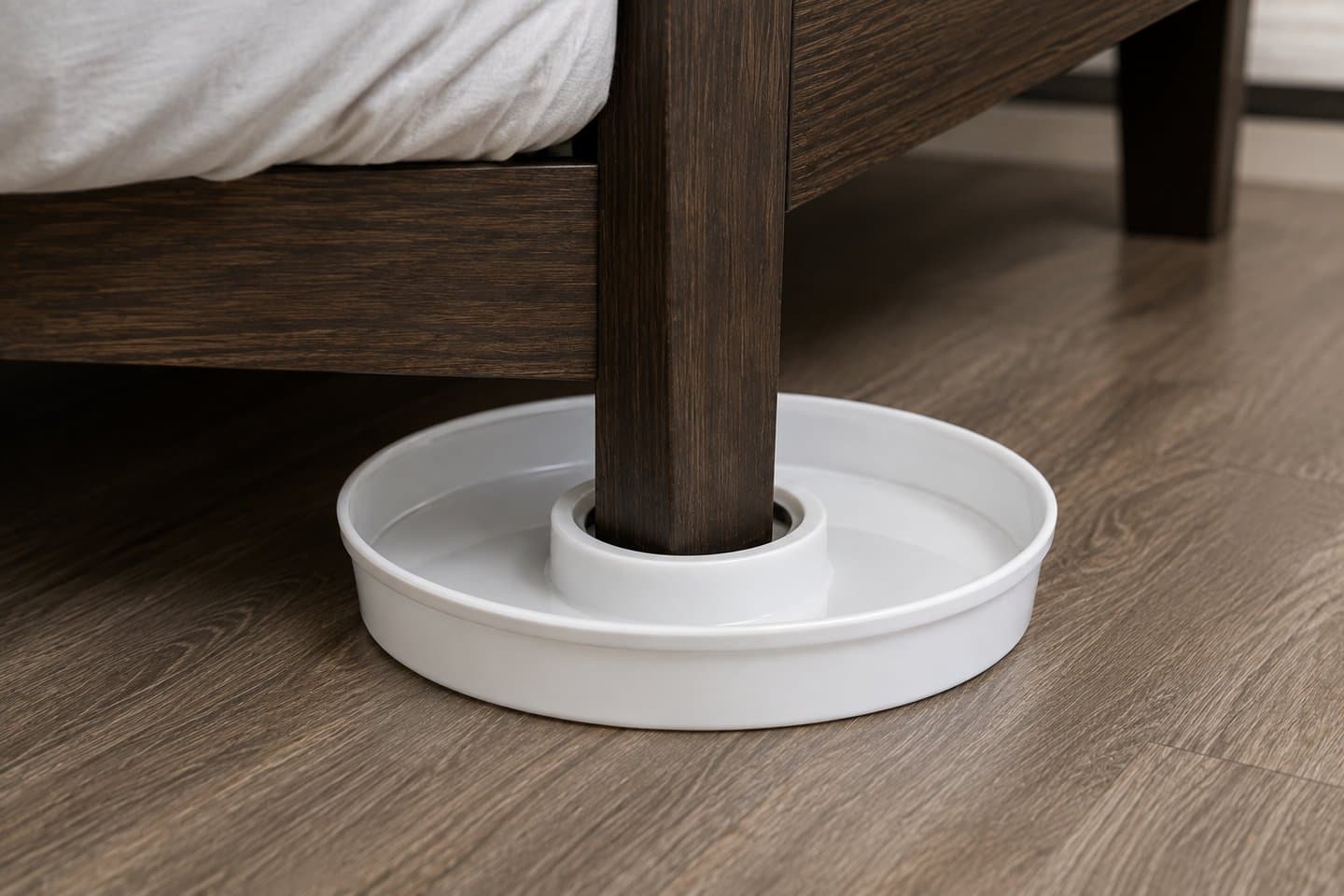
Interceptors under the bed legs and monitor traps give you verifiable data you can read yourself in the weeks that follow. "I'm not getting bitten anymore" is not data: roughly one person in three does not react to bites, and a residual population can go weeks without showing itself.
What DIY actually costs
The honest calculation is not "$40 of products" versus the price of an intervention. You have to add up what two months of attempts produce:
- Breeding time gained by the colony. A female lays continuously; two months means several generations and a far larger infested area.
- Dispersal. Repellents push the population into wall voids, turning a one-room treatment into a whole-unit — sometimes whole-building — treatment.
- Furniture discarded for nothing. Mattress, box spring, sometimes a sofa — often replaced before the cause was ever treated.
- The human cost. Sleep, anxiety, isolation. It is the cost nobody talks about and often the heaviest.
We regularly see cases where the initial intervention would have been simple and where the delay tripled the work. Early detection is not a sales slogan: it is the only variable you genuinely control.
What to require from a company
If you call a professional, four questions are enough to sort them:
- Do you inspect before treating? A company giving a firm price over the phone without having seen the scale is guessing.
- Does the treatment stay active after you leave, and for how long? That is the egg question, asked differently.
- Do you hold the required permit and certificates? The applicator must be certified, and the company must hold a permit from Quebec's Ministry of the Environment.
- Do you declare the intervention to the City? In Montreal it is a regulatory obligation resting on the exterminator, within 5 days of the intervention. We explain that mechanism in detail here.
Our reference page compares the four treatment methods — heat, residual chemical, dry steam and combined, with each one's limits and the landlord-tenant responsibility rules in Quebec.
In short
Three home methods have real value: the hot dryer cycle, certified mattress encasements and interceptors under the bed legs. Use them without hesitation, including while waiting for an intervention.
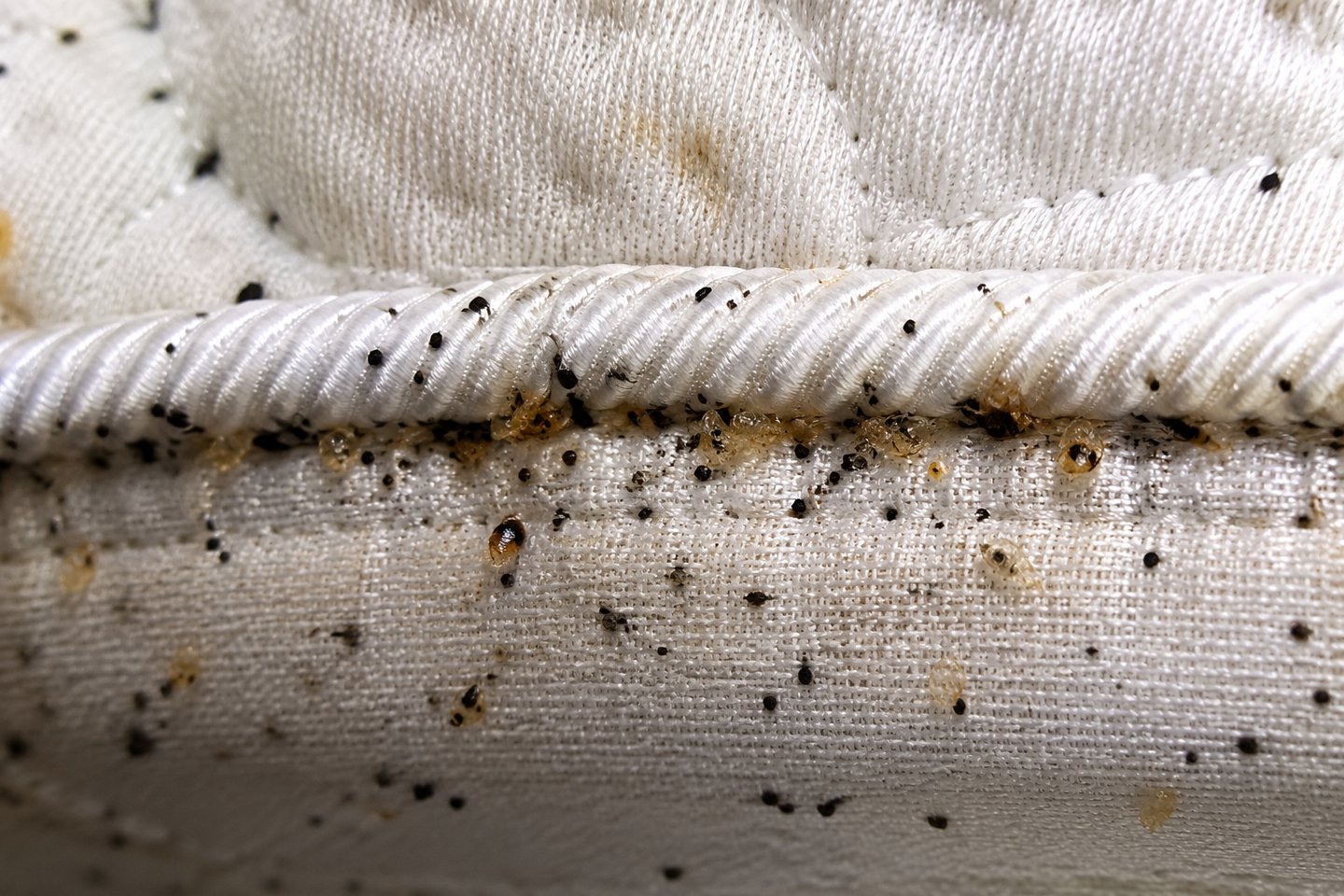
Everything else — foggers, sprays, oils, discarded furniture, abandoned bedrooms — costs time at a moment when time is working against you. If you have found traces on your mattress seams, check the signs one by one first, then get an inspection. The best case is the one caught early.
Frequently Asked Questions
Is diatomaceous earth effective against bed bugs?
At what temperature do bed bugs die?
Why shouldn't you use a fogger against bed bugs?
Should you throw out your mattress when you have bed bugs?
How long can a bed bug survive without feeding?
Need a professional exterminator?
Contact us for a free evaluation and a treatment plan tailored to your situation.