
Ground wasps: recognizing a nest in the soil and what to do
"Ground wasps" are almost always yellowjackets settled in an old burrow. People often find them while mowing. Yet not every insect nesting in the soil needs to be destroyed.
In brief
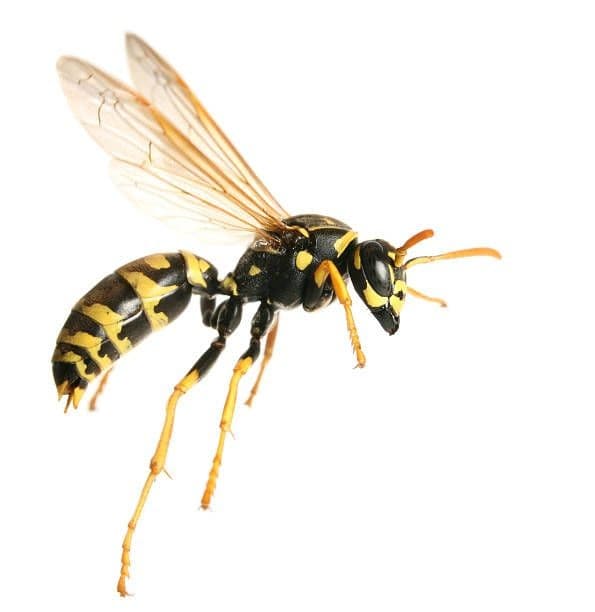
"Ground wasps" are most often yellowjackets that have built their nest in an old burrow or a cavity in the soil. The entrance is a simple hole with wasps going in and out non-stop. Don't pour anything into the hole and don't plug it. Mark the area, avoid mowing there and have the nest treated if it is near a place people walk.
Wasps, bees or bumblebees? Who nests in the ground
Several insects dig in or occupy the soil in Quebec. Only one is a real problem. Look at the insect, then at the number of holes.
| Insect | Appearance | What you see on the ground | What to do |
|---|---|---|---|
| Yellowjacket (Vespula) | 10 to 16 mm, bright yellow and black, smooth body, narrow waist | A single hole with heavy, constant traffic | Have it treated if the nest is near a walkway |
| Solitary bees (mining bees, cellophane bees) | 8 to 15 mm, hairy body, brown or black | Several small mounds of soil, one hole each, for a few weeks in spring | Leave them: they pollinate and don't defend their hole |
| Bumblebee | Large, round, very fuzzy, black and yellow | A discreet entrance under a tuft of grass or in an old burrow, little traffic | Leave if possible: small colony, not very aggressive |
| Digger wasps (sand wasps) | Long, very narrow waist, often black or black and orange | Isolated holes in sandy, sunny soil | Leave them: solitary, they hunt other insects |
Traffic is the most reliable test. One hole with dozens of trips a minute is a yellowjacket nest. Many small holes with an insect now and then are solitary insects.
Why in my yard?
The queen doesn't dig: in spring she looks for a ready-made cavity, then the workers enlarge it by carrying soil out grain by grain. The most common sites:
- an old rodent burrow;
- the void under a slab, a step or a walkway;
- a dry-stone wall or a woodpile;
- the base of a hedge, a stump or a composter.
Dry, well-drained, undisturbed soil suits them. The nest itself is made of paper, like an aerial nest, but only the entrance is visible.
Why these nests are risky
A ground nest is the one people disturb without meaning to. The vibrations of a lawn mower or a string trimmer are enough to trigger the colony's defence, and the person is then standing right over the entrance.
Children playing and dogs digging are exposed for the same reason. By late summer, a colony can number several thousand individuals.
What not to do
- Pour gasoline, oil or any other liquid into the hole. It is dangerous, it contaminates the soil, and the liquid often doesn't reach the nest, which can be offset from the entrance.
- Flood the nest with a garden hose. Water soaks into the soil without destroying the colony, and the wasps come out in numbers.
- Plug the entrance with a stone or soil. Workers dig another exit within hours.
- Set it on fire.
- Mow over it "quickly".
What to do now
- Locate the entrance from a distance, in daylight, by watching where the wasps leave from and return to.
- Mark the area with a stake or a visible object, several metres from the hole, so nobody walks there.
- Stop mowing and trimming in that area.
- Keep children and pets away.
- In case of multiple stings or an allergic reaction (trouble breathing, facial swelling, faintness), call 911.
Treat or wait?
Have it treated when the nest is near an entrance, a patio, a play area, a vegetable garden or a spot you have to mow, or when someone in the household is allergic.
You can wait when the nest is at the back of the yard, far from any traffic, and the season is advanced. The colony dies with the first hard frosts and the nest isn't reused. Then simply fill the hole in winter.
Our certified technicians treat the nest at its entrance with Health Canada approved products. The hole can be filled once activity has stopped. See our service: Wasp exterminator in Montreal, or request a free quote.
Preventing a ground nest
- Fill old burrows and cavities under slabs in early spring, before queens look for a site.
- Keep the lawn dense. Bare, dry patches are colonized first.
- Watch the yard in May and June: a wasp going in and out of the same hole several days in a row is founding a nest.
- Pick up fallen fruit and close garbage bins in late summer: they draw workers close to the house.
A nest in a wall rather than in the ground? See Wasp nest in a wall: how to recognize it and what to do. For the whole topic: Wasp nest in Montreal: identify, eliminate and prevent.
Frequently Asked Questions
How do I know if they are ground wasps or bees?
Will the nest be reused next year?
Can you drown a ground wasp nest?
How many wasps are in an underground nest?
Need a professional exterminator?
Contact us for a free evaluation and a treatment plan tailored to your situation.