
Bald-faced hornet and Quebec's large wasps: how to tell them apart
The large black-and-white wasp that worries people is a native species, the bald-faced hornet. It is not the Asian hornet. Here is how to recognize it and Quebec's other large wasps.
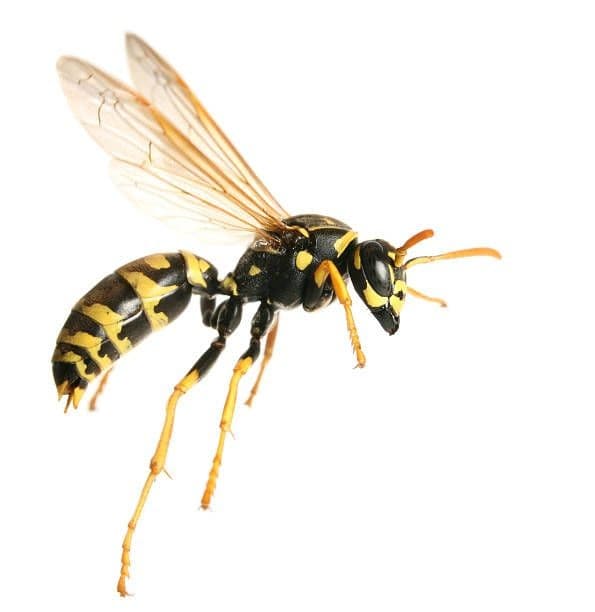
In brief
The large black wasp with white markings is the bald-faced hornet (Dolichovespula maculata). It builds a large closed grey nest, hanging in a tree or under an eave. It defends its nest vigorously but doesn't go after people away from it. A nest that is high up and far from foot traffic can stay in place until the frost.
Identification table for Quebec's large wasps
| Species | Size | Colours | Nest | Remember |
|---|---|---|---|---|
| Bald-faced hornet | 15 to 20 mm | Black, ivory-white markings on the face and the tip of the abdomen | Large closed grey ball, hanging: tree, shrub, eave | Very defensive near the nest |
| Yellowjacket | 10 to 16 mm | Bright yellow and black | Hidden: ground, wall, attic | The one most often involved around tables and garbage bins |
| Paper wasp | 15 to 20 mm, slender body | Brown, reddish and yellow; long legs dangling in flight | Small open umbrella-shaped nest, cells visible | Not very aggressive, small colonies |
| European hornet | 20 to 35 mm | Reddish-brown and yellow | Cavity: hollow tree, attic, shed | The largest; also active in the evening, drawn to lights |
| Horntail (pigeon tremex) | 25 to 40 mm | Brown and yellow, cylindrical body, long visible "stinger" | None: the female lays eggs in dead wood | Impressive but harmless: it doesn't sting |
The European hornet has been reported in southern Quebec, where it remains uncommon. It, and not an Asian hornet, is what you are looking at when you see a truly very large, reddish-brown wasp.
The bald-faced hornet in detail
Despite its common name, it isn't a true hornet: it belongs to the same group as the yellowjackets. Its colours make it unmistakable. No other local wasp is black and white.
It hunts flies and other insects to feed its larvae, which makes it a useful species in the garden. Adults also visit flowers and ripe fruit.
Its behaviour fits in one sentence: indifferent away from the nest, very defensive right next to it. It can sting several times.
Recognizing its nest
The nest is made of chewed wood, which gives it the look of streaked grey paper. It is fully enclosed, with a single opening at the bottom.
- In May and June, it is the size of a golf ball, then an orange. The queen works on it almost alone.
- In August and September, it reaches the size of a ball, sometimes more, and houses a few hundred workers.
- After the frosts, it is empty. It will not be reused.
It is found in the branches of a tree or shrub, in a hedge, under a cornice or an eave, sometimes on a fence. Nests in hedges are the ones people discover most abruptly, while trimming.
What about the Asian hornet?
It is not established in Quebec. The Asian giant hornet (Vespa mandarinia) was detected in British Columbia starting in 2019; it has not settled in the east of the country.
Reports of "Asian hornets" in Quebec almost always turn out to be a bald-faced hornet, a European hornet or a horntail. If you genuinely think you have seen one, take a photo and report it to Quebec's Ministry of Agriculture, Fisheries and Food.
What to do about a bald-faced hornet nest
You can leave it if it is high in a tree or at the back of the yard, away from doors, windows and play areas. The colony dies with the first hard frosts.
Have it treated if it is:
- near an entrance, a balcony, a patio or a pool;
- in a hedge or shrub you have to trim;
- at a child's height;
- in a household where someone is allergic to stings.
What not to do:
- knock it down with a stick or a jet of water;
- spray it from a ladder: the fall is as serious a risk as the stings;
- bag it or set it on fire;
- trim the hedge around it hoping not to touch it.
Our certified technicians work with the appropriate protective equipment and Health Canada approved products. See our service: Wasp exterminator in Montreal, or request a free quote.
Prevent rather than discover
- Inspect eaves, hedges and shrubs in May and June. A nest the size of a golf ball is far easier to deal with than one the size of a ball.
- Look before you trim: walk around the hedge and watch for traffic.
- Remove old empty nests in winter if you wish. They won't be reoccupied, but their presence doesn't stop a new queen from settling next to them.
Your nest isn't hanging? See Wasp nest in a wall or Ground wasps: nest in the soil. For the whole topic: Wasp nest in Montreal: identify, eliminate and prevent.
Frequently Asked Questions
Is the bald-faced hornet dangerous?
Is the bald-faced hornet really a hornet?
Are there Asian hornets in Quebec?
Can I leave the nest in place?
Need a professional exterminator?
Contact us for a free evaluation and a treatment plan tailored to your situation.