Pest Control in Food Facilities: Plants, Warehouses and Grocers Under CFIA Rules and Audits
In food processing and storage, getting rid of pests is not enough: it has to be done without contaminating anything, and proven to CFIA or an auditor. Here is what the federal regulation says and what an audit-ready program looks like.
In brief
A business that manufactures, processes, stores, packages or labels food for export or for another province — or that imports food — generally falls under the Safe Food for Canadians Regulations (SFCR), enforced by the Canadian Food Inspection Agency (CFIA). Section 51 requires that the establishment be protected against the entry of any animal that presents a risk of contaminating food, that no animal be present where food is handled or stored, and — the key point — that the measures taken must not themselves present a risk of contamination. CFIA expects a documented program: numbered devices on a map, records, corrective actions. Inside processing areas, its guidance favours traps over baits. Grocers, bakeries and restaurants selling on site fall under MAPAQ instead — see our article on food inspection in Quebec.
Who is covered: MAPAQ, CFIA, or both
The food sector does not answer to a single authority.
- MAPAQ (and, in Montreal, the City's Food Inspection Division acting as its agent) applies Quebec's Food Regulation to establishments that prepare and sell within the province: restaurants, grocers, bakeries, butchers, caterers, warehouses distributing in Quebec.
- CFIA applies the SFCR to businesses that need a federal licence: generally those that import food, or that manufacture, process, package or label it for export or shipment to another province. These licence holders must also maintain a preventive control plan, in which pest control has its place.
- Customers and certifications add their own requirements. A plant selling to a grocery chain is often required to pass a recognized food safety audit, where the pest management program is reviewed line by line.
Exact licensing rules vary by commodity and activity; CFIA provides a tool to check whether a licence is required. What does not vary is the expectation on pests: absence, prevention, proof.
What the federal regulation says
The SFCR groups its requirements in a subdivision titled "Sanitation, Pest Control and Non-food Agents." Section 51 has three subsections:
- 51(1) — the establishment must be protected against the entry of any animal that presents a risk of contamination of food;
- 51(2) — no animal may be present in the facility or conveyance where food is manufactured, processed, stored, packaged or labelled (subject to listed exceptions);
- 51(3) — the measures taken to comply with the first two subsections must not present a risk of contamination of food.
Section 57 adds a design requirement: the interior of facilities must be built and maintained so as to prevent the entry of insects, rodents or other vermin.
Subsection 51(3) is what really sets the food industry apart. Eliminating a pest is not enough: the method itself is regulated. Pelleted rodenticide in a packing room, spraying above an open line, a glue board forgotten above a conveyor are all contamination risks — and therefore non-compliances, even if the pest is gone.
What CFIA expects from a program
CFIA's pest control guidance describes a written program that answers six questions:
| Question | What it should contain |
|---|---|
| Who? | The people or company responsible for the activities |
| Where? | The premises and areas covered, indoors and outdoors |
| What? | The methods, products and equipment used |
| When? | How often inspections are done and products replaced |
| How? | The steps, with no risk of contamination or injury to employees |
| Records | Logs of activities, corrective actions and their effectiveness |
Three points in the guidance are worth knowing:
- Devices are numbered and their locations marked on a floor plan or site plan, bait points included.
- Indoors, traps first. The guidance states that only traps should be used inside an establishment, especially in processing areas. If bait is needed in processing or storage, it must be in a bait station and used when no activity is taking place.
- Block baits are preferred over pellets and powders, which can scatter. The type of rodenticide used is recorded, and old or spoiled baits are removed.
Pests specific to food facilities
Stored product insects
This is the category homeowners rarely meet and the industry dreads: Indian meal moth, flour beetles, sawtoothed grain beetle, weevils. They do not come from outside the building; they arrive in the goods — a bag of flour, a pallet of cereal, a lot of spices — and spread to neighbouring products. Control relies on inspection at receiving, stock rotation and monitoring with pheromone traps. See our page on stored food insects.
Rodents at the dock
In a warehouse, mice and rats almost always get in through the loading docks: doors open during loading, worn leveller seals, damaged bottoms on sectional doors. Pallets stacked against walls then give them a hidden corridor. See how to tell a mouse from a rat, because the setup depends on it.
Cockroaches
They dominate in bakeries, grocers with prep counters and central kitchens: heat, moisture and motorized equipment suit them. Treatment follows the same logic as in restaurants — see how a restaurant treatment works.
Flies
House flies near docks and waste, drain flies in wet floors. They are controlled first by exclusion and sanitation, then by capture devices placed away from exposed product. See fly types.
The program in three rings
An industrial pest management program reads as three concentric rings, from the outermost to the most sensitive:
- The exterior perimeter. Locked, anchored, numbered bait stations along the outside walls and near containers. This is where rodent pressure is intercepted, far from food.
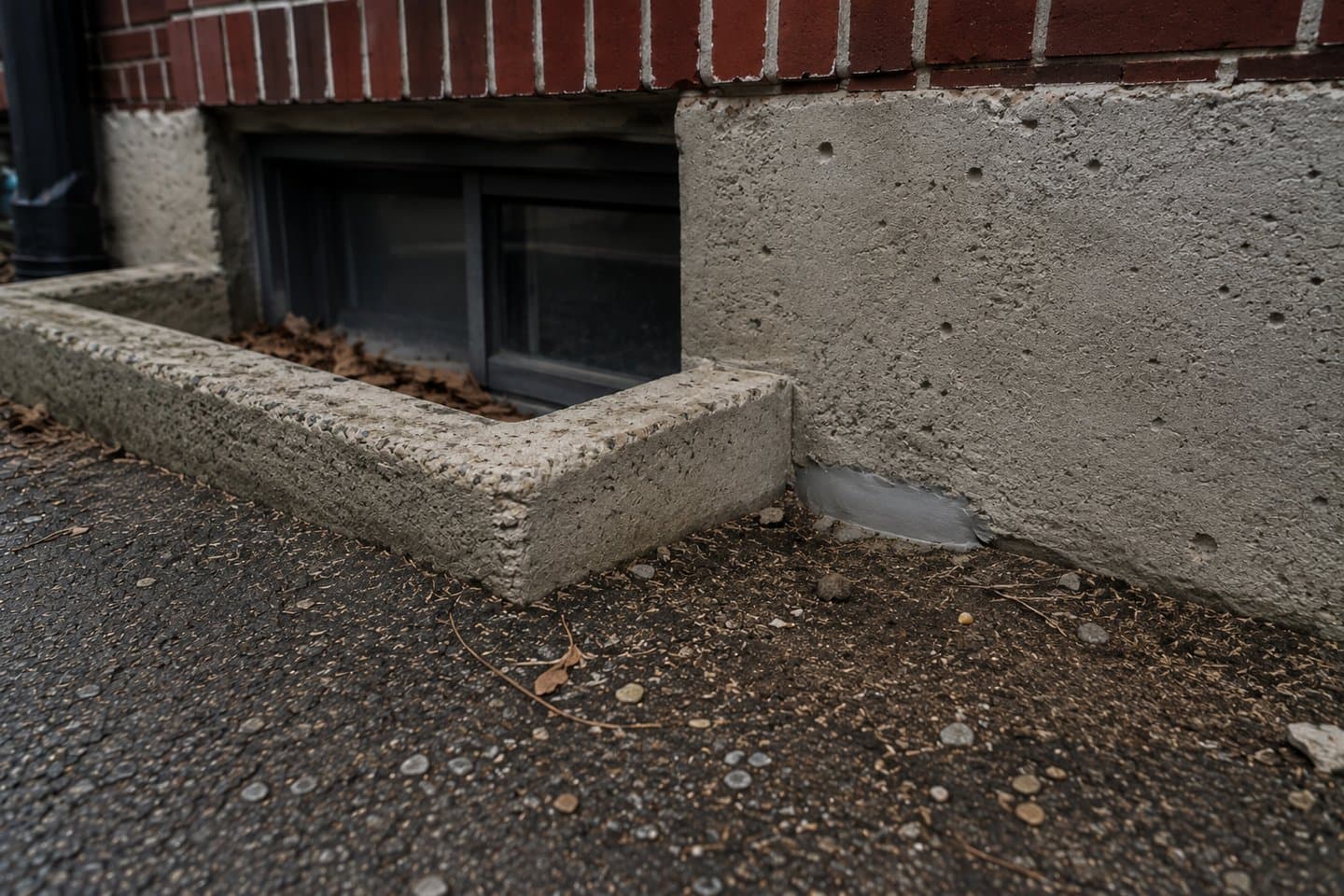
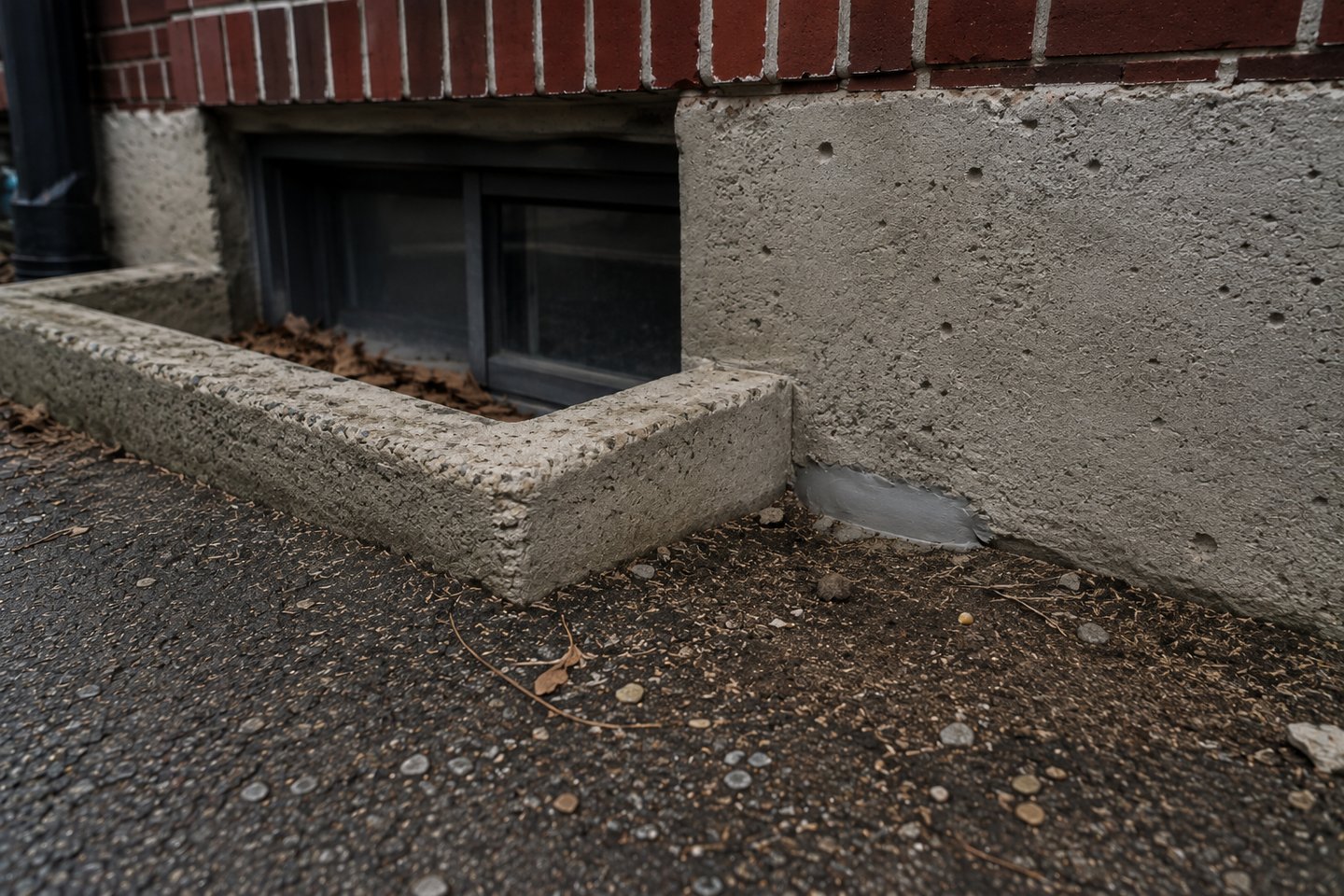
- The building envelope. Door bottoms, dock seals, pipe and cable penetrations, screened vents. This is the design requirement of section 57, and the part with the best return: every opening closed is a problem that no longer arises.
- The interior. Numbered mechanical traps along walls and at doors, pheromone traps for stored product insects, flying insect capture devices. No toxic bait in processing areas, except under controlled exception.
Receiving and storage: where it is won or lost
Most warehouse problems are solved before the exterminator even shows up:
- Inspect every lot at receiving: torn packaging, webbing, larvae, droppings, gnaw marks. CFIA's guidance lists damaged packaging and gnaw marks among the signs to watch for.
- Reject or isolate a suspect lot instead of shelving it with everything else.
- Keep a clear aisle along the walls: it allows inspection and trap placement, and denies rodents a hidden corridor.
- Rotate stock (first in, first out). A bag forgotten at the back of a rack for months is an insect incubator.
- Clean up spills of flour, sugar or grain, including under racking.
- Close dock doors as soon as loading is done.
Documentation that passes an audit
In front of a CFIA inspector or a certification auditor, the program is judged on paper. Here is what is expected in the pest management binder — or portal:
- the written program (who, where, what, when, how);
- an up-to-date device map, each number matching a real device in the field;
- the report from every visit: findings, catches per device, products used, quantities;
- the product labels and sheets with their registration numbers;
- proof of certification for technicians and the company licence;
- recommendations and corrective actions, with follow-up: who fixed what, and when;
- trend analysis: a device that catches at every visit is not a good device, it is an area to fix.
The most common failure is not missed visits, it is a map that no longer matches the floor: stations moved by a forklift, numbers worn off, traps pulled during a re-layout. An audit often starts by checking a few numbers at random.
How we work in food facilities
- Initial inspection of the perimeter, envelope and interior, followed by a written program and a numbered device map.
- Methods chosen to contaminate nothing: mechanical traps indoors, locked stations outdoors, targeted applications away from production areas and outside operating hours.
- CD5 certified technicians, Health Canada registered products, business licence C5 no. 402574504.
- A written report at every visit, designed to be filed as is in the record shown to the inspector or auditor.
- Visits scheduled around your production shifts and shutdowns.
As in restaurants, we state up front what treatment cannot make up for: a dock left open, a torn leveller seal, an infested lot accepted at receiving. These are recorded in the report, with the recommended correction.
The first exchange is a free price estimate. The detailed inspection is billed, then deducted from the program price if you go ahead. See our commercial pest control page.
Sources
- Safe Food for Canadians Regulations (SOR/2018-108), sections 51 and 57, subdivision "Sanitation, Pest Control and Non-food Agents" — Justice Canada.
- Canadian Food Inspection Agency, Pest control guidance (preventive controls).
This text presents the regulatory framework for information purposes and does not constitute legal advice. To find out whether your business needs a federal licence, consult CFIA.
For a food plant, warehouse or food business in Montreal, Laval, the South Shore or the North Shore, call us at (514) 835-2108.
Frequently Asked Questions
Does my food business fall under CFIA or MAPAQ?
Can rat poison be used in a food plant?
What does an auditor check in a pest management program?
Where do insects in a food warehouse come from?
Does the law set a frequency for exterminator visits?
Need a professional exterminator?
Contact us for a free evaluation and a treatment plan tailored to your situation.