The Different Types of Flies in Quebec: How to Identify and Get Rid of Them
Not all flies are alike — and more importantly, they aren't treated the same way. Here's how to recognize the 7 most common flies in Quebec homes and the right method to eliminate each one.
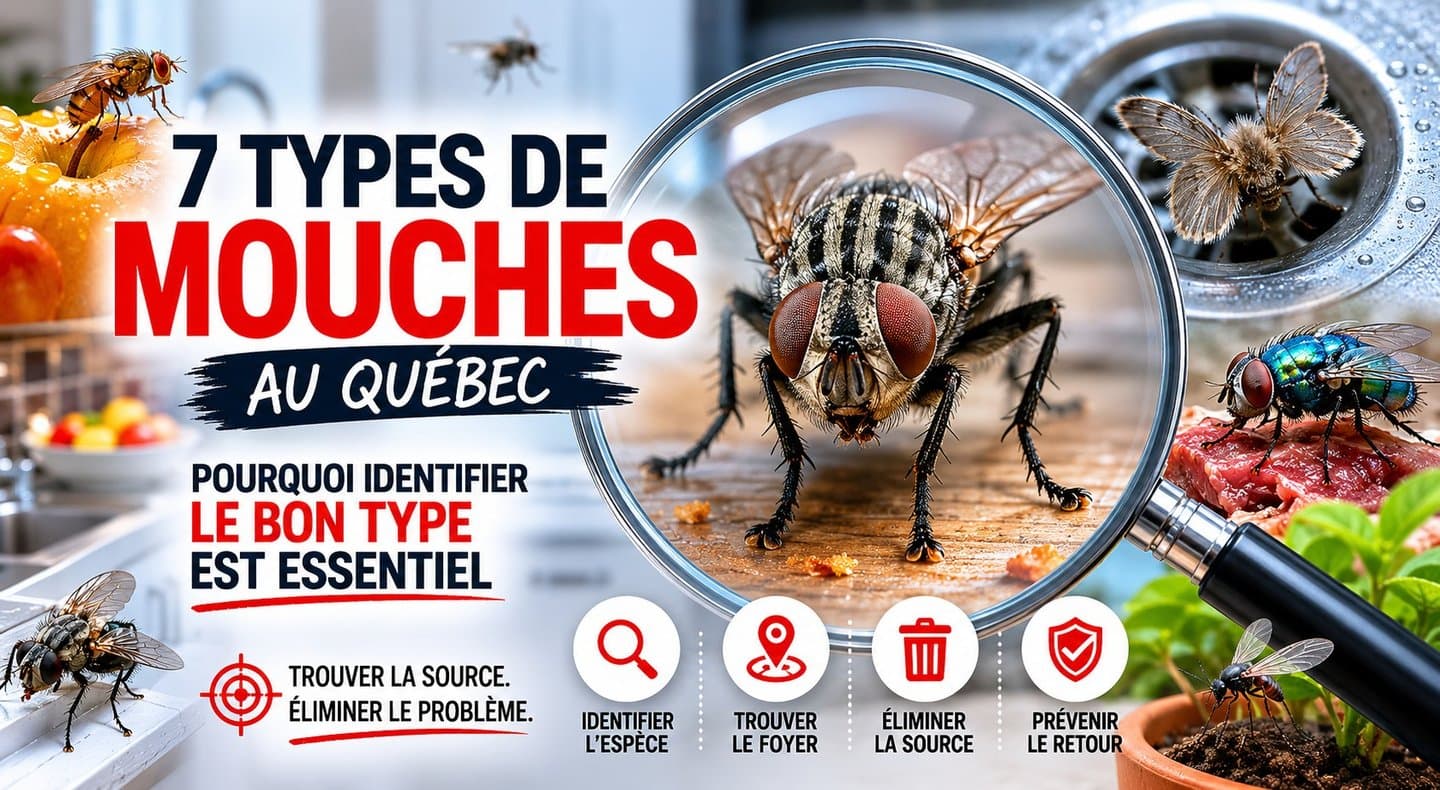
Why identifying the right fly type is essential
A fly buzzing around the kitchen is annoying. But did you know there are dozens of fly species in Quebec, each with a different origin, behaviour and elimination method? Treating a fruit fly like a drain fly guarantees failure: you kill the visible adults, but the source — often invisible — keeps producing hundreds of new flies.
Before reaching for the swatter, you must identify the species and above all find the breeding site. Here are the 7 most common flies in Greater Montreal homes and businesses.
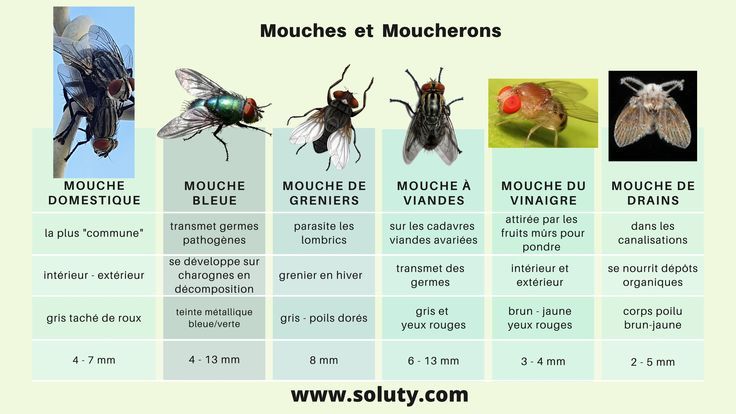
1. The house fly (Musca domestica)
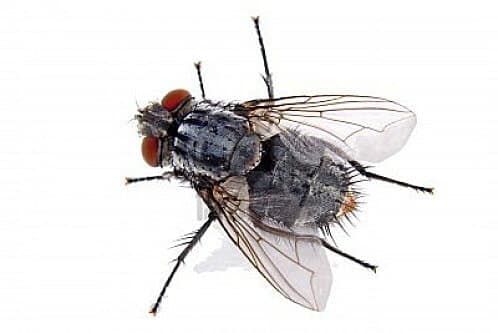
The most common fly. Grey, 6-7 mm, with four black stripes on the thorax. It breeds in decaying organic matter: garbage, compost, animal waste. A female lays up to 500 eggs in days.
Health risk: it carries over 100 pathogens (salmonella, E. coli) on its legs and deposits them on food. Solution: waste management, screens, and professional treatment of breeding sites.
2. The fruit fly (Drosophila)
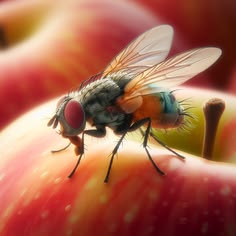
Tiny (2-3 mm), yellow-brown with characteristic red eyes. It swarms around ripe fruit, recycling bottles, sinks and compost bins. Its life cycle is so fast (8-10 days) that a small presence becomes an invasion in a week.
The classic trap: killing adults is useless if larvae develop in the sink drain or under the dishwasher. You must eliminate the fermentation source.
Overrun by flies? We find the source.
Our technicians identify the species and breeding site — not just the visible adults.
📞 Call (514) 835-21083. The drain fly (Psychodidae)
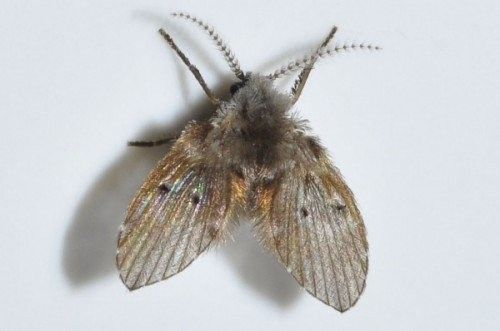
Also called moth fly for its fuzzy body and heart-shaped wings. It lives in the biofilm (slimy layer) lining the inside of drains, traps and overflows. Often seen motionless on bathroom walls.
Key clue: if flies appear near sinks, showers or basement floor drains, it's almost always a drain fly. Treatment requires enzymatic cleaning of the pipes — surface insecticides are useless.
4. The blow fly / bottle fly (Calliphoridae)
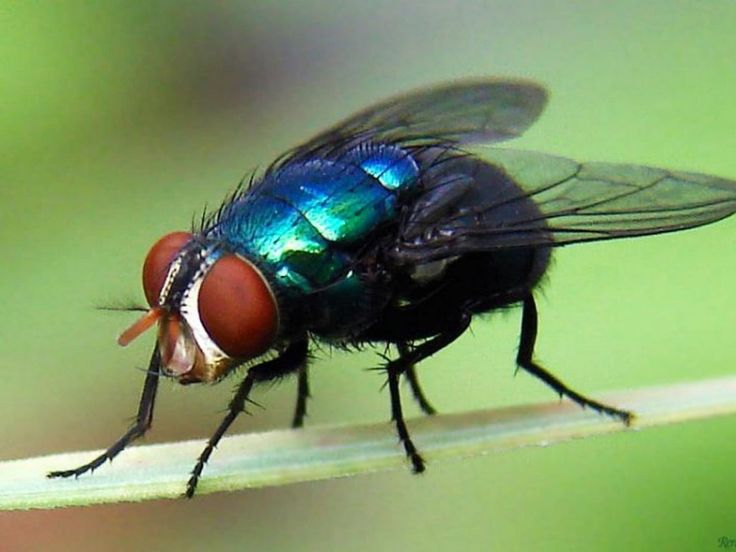
Recognizable by its metallic blue or green body and loud flight. Attracted to meat, carcasses and decaying animal matter. A sudden large indoor presence can signal a serious problem: a dead animal in a wall, attic or under a deck.
If several large blue/green flies appear for no apparent reason, don't delay — there's likely a hidden source of decomposition to locate.
5. The fungus gnat (Sciaridae)
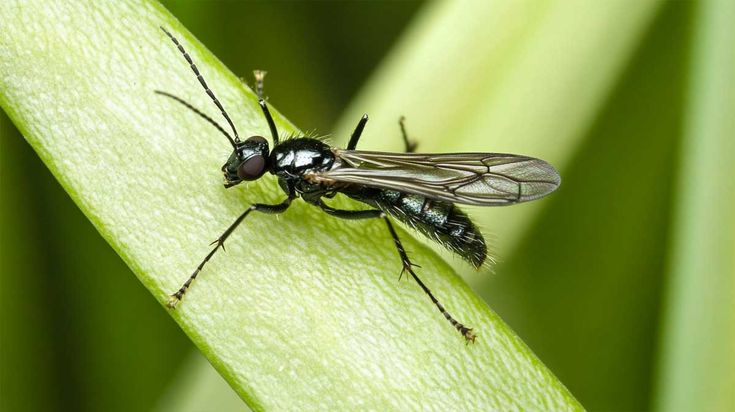
Those tiny black flies hovering around your indoor plants are fungus gnats. Their larvae live in moist potting soil, feeding on roots and organic matter. Very common in Quebec winters, when plants come inside and get overwatered.
Solution: let the soil surface dry out, improve drainage, and treat the soil if the infestation persists.
6. The cluster fly (Pollenia)
In autumn, these slow flies, slightly larger than house flies, seek to overwinter in walls, attics and window frames. They reappear in large numbers on mild winter days or in spring, clustered near sunny windows. Often called "fly clusters." Treatment is preventive: sealing cracks and a fall perimeter treatment.
7. The stable fly / biting fly (Stomoxys calcitrans)
It looks like a house fly but it bites — humans and animals. Common near stables, farms, and where there's decaying plant matter. Its bites to the ankles and calves are painful. If your "flies" bite, this is probably the culprit.
How to get rid of flies: the professional method
Whatever the species, lasting elimination relies on 3 principles:
- Identify the species to target the right source (kitchen, drain, plant, wall, outdoors).
- Eliminate the breeding source — that's 90% of the work. Killing adults without treating the source only buys a few days.
- Prevent the return: screens, waste management, sealing, perimeter treatment.
At 514 Extermination, we don't just spray: we inspect, identify the exact species, locate the breeding site, and apply targeted treatment with Health Canada approved products. All with a written guarantee.
A fly invasion? Response within 4 hours.
Montreal · Laval · South Shore · North Shore — 24/7. Free quote.
📞 Call now: (514) 835-2108Frequently Asked Questions
Why are there suddenly lots of flies in my home?
How to tell a fruit fly from a plant fungus gnat?
Are store-bought fly traps effective?
Are flies dangerous to health?
How long to eliminate a fly infestation?
Need a professional exterminator?
Contact us for a free evaluation and a treatment plan tailored to your situation.