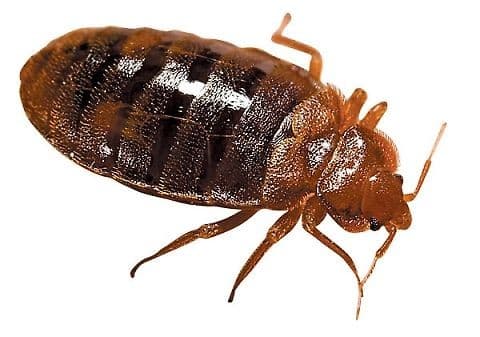
Pests in a Rental: Your Rights as a Tenant, and When You Can Pay and Get Reimbursed
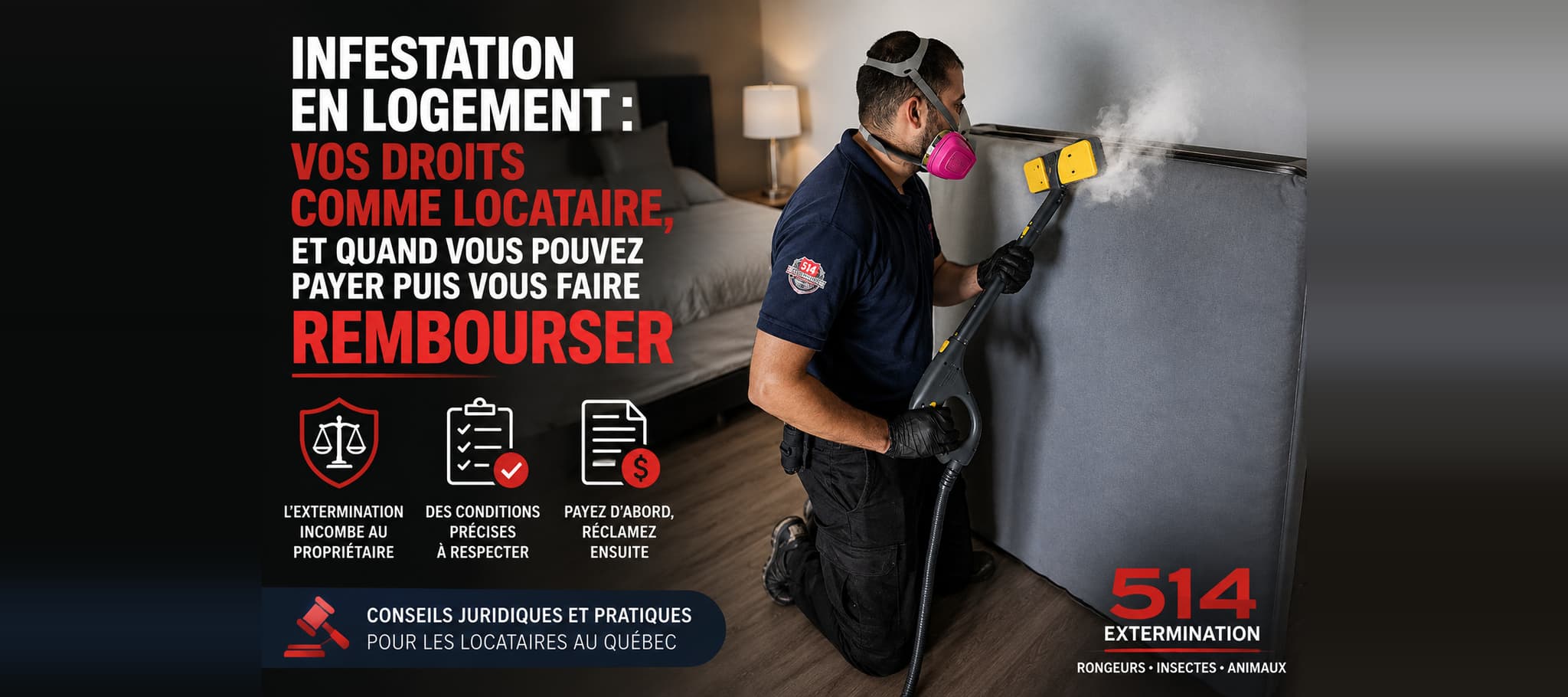
Extermination is the landlord's duty — a public order obligation no lease clause can override. And if it is urgent and they fail to act, the Civil Code lets you have the work done and claim reimbursement. Under precise conditions.
The short answer
In Quebec, extermination is the landlord's responsibility. The lessor must deliver a dwelling in good habitable condition and maintain it that way for the entire lease (articles 1854 and 1910 of the Civil Code of Québec). The presence of vermin — bed bugs, cockroaches, mice, rats — undermines that habitability, so eliminating it falls to them.
Two points that settle a lot of arguments:
- This obligation is public order. No lease clause can override it. A signature under a document stating "extermination is at the tenant's expense" does not make that clause valid.
- It does not depend on who "brought" the insects in. The landlord cannot bill you for treatment merely because you reported the problem.
And if the situation is urgent and they fail to act, article 1868 of the Civil Code allows you, under certain conditions, to have the work done and claim reimbursement. That is the heart of this article, and we get to it below — with the conditions, because they matter as much as the right itself.
What the law says, precisely
On the landlord's side
- Articles 1854 and 1910: they must deliver the dwelling in good habitable condition and maintain it so throughout the lease.
- Article 1913: they may neither offer for rent nor deliver a dwelling unfit for habitation.
Case law has clarified the scope of this obligation regarding vermin: the landlord must take the necessary steps without delay, using competent professionals. It is not merely an obligation to "make efforts" — the courts treat it as an obligation of result.
On the tenant's side
You have obligations too, and they often decide the outcome of a dispute:
- Articles 1855 and 1911: use the dwelling with prudence and diligence, and keep it clean.
- Article 1866: inform the lessor of defects and deterioration. In other words, reporting is an obligation, not just a right.
- Article 1857: allow access to the dwelling, on notice, for verification and work.
That last point traps the most people: refusing the technician access, or failing to prepare the unit as instructed, can be held against you — and it is the only ground where your responsibility is genuinely engaged.
What to do if the landlord does not act
Order matters. Each step creates the evidence the next one depends on.
1. Report in writing, from the first sign
A phone call leaves no trace. Send an email or a text, and keep a dated copy. Describe what you see, where, and since when. Attach dated photos if you have them.
2. Allow a reasonable delay
What "reasonable" means depends on severity. For an active bed bug or cockroach infestation, that means days, not weeks: the problem worsens and spreads to neighbouring units in the meantime.
3. Send a formal notice
If nothing moves, a written formal notice sets a specific deadline and states what follows. Send it in a way that lets you prove receipt.
4. Apply to the rental board
You can seek an order compelling the work, and depending on the case a rent reduction or damages for loss of enjoyment. Article 1867 also allows you to ask the court for authorization to carry out the work yourself.
That is the normal route. But it takes time — and time is exactly what is short when an infestation is spreading.
Emergencies: pay first, claim after (article 1868)
Here is the remedy few tenants know about, and it answers precisely this situation.
Article 1868 of the Civil Code of Québec allows a tenant to undertake a repair or incur an expense even without court authorization, where it is urgent and necessary to ensure the preservation or enjoyment of the leased property. The tenant is then entitled to reimbursement of the reasonable expenses incurred, and may if necessary retain that amount from the rent — without needing prior approval from the rental board.
The conditions, which matter as much as the right
- You must have tried to reach the landlord — or informed them, if they fail to act in time. Note dates, times, the name of the person reached, and keep your written messages. It is the first thing you will be asked for.
- The situation must genuinely be urgent and necessary. It is an exceptional measure, not a shortcut around the conversation.
- Limit yourself to the essentials, and spend as if it were your own property. The test is whether the amount is reasonable.
- Keep everything: itemised invoice, receipts, intervention report.
- The landlord may step in at any time to take the work over.
The risk, stated plainly
If the tribunal later finds the expense was not urgent and necessary, or the amount not reasonable, you bear the cost — and retaining from rent an amount that does not correspond to reasonable expenses exposes you to a claim for unpaid rent.
That is not a reason to give up the remedy. It is a reason to document it seriously, and to use a company that issues an itemised invoice and a written report.
What decides a case: the evidence
A file is rarely won on principle — it is won on what you can show. From day one, build:
- A dated log: observation dates, rooms affected, how it evolved.
- Dated photos of the insects, the traces, the bites where applicable.
- Every communication with the landlord, in order: report, follow-ups, formal notice, replies or silence.
- The itemised invoice and intervention report, if you had the work done.
- In Montreal, the declaration to the City. Every bed bug extermination must be declared, and the obligation rests on the exterminator, within 5 days. We detail that mechanism here. That declaration is an official, dated record working in your favour.
A report identifying the species, describing the scale and documenting the intervention is worth far more than a one-line invoice.
Costly mistakes
- Self-treating with aerosols. The most damaging move: repellent products scatter the population into wall voids and toward neighbouring units, and their residues render useless the baits a professional will place afterwards. We explain why here. Legally, it also muddies proof of the original scale.
- Refusing access or not preparing the unit. The one ground where your own responsibility is genuinely at stake, and it can be held against you.
- Reporting only verbally. Without writing, step 1 does not exist.
- Walking out on impulse. To be justified in abandoning the dwelling, its condition must pose a serious threat to health or safety within the meaning of article 1913 — or have been declared as such by a competent authority. That is a high bar.
- Waiting. An infestation does not stabilise on its own, and delay works against your case as much as against your home.
If you are the landlord, the reverse reading
From the other side, the same rule is simple: acting fast costs less than arguing.
A case handled within days of the report stays confined to one unit. The same case three months later reaches the adjoining units through the plumbing stacks, and the bill changes scale — quite apart from the risk of an order, a rent reduction or damages.
Two useful reflexes: inspect the adjoining units at the first report, and keep a documented history of interventions. That history serves you in a dispute, and when selling the building. Our building protocol is detailed here.
How we can help, concretely
Whether you are a tenant or a landlord, what serves you in a case like this is documents:
- Free inspection and quote, identifying the species and the scale — useful in establishing that an intervention was necessary.
- A firm price before the work, which speaks directly to the "reasonable amount" test.
- An itemised invoice and written report, rather than a single unexplained line.
- Declaration to the City for bed bugs, in accordance with the Montreal by-law.
- A written guarantee, whose conditions and exclusions are published here.
Our numbers — C5 business permit no. 402574504 and CD5 applicator certificates — appear on every report. An intervention carried out by an uncertified company weakens your case as much as your treatment.
Request a free inspection here, or call us at (514) 835-2108.
Disclaimer
This article provides general information on the framework applicable in Quebec. It is not legal advice and does not replace a consultation. Every situation turns on its own facts. For guidance, contact the Tribunal administratif du logement, a local housing committee, or a lawyer.
Sources
Lessor and lessee obligations, repairs and remedies: Civil Code of Québec, articles 1854, 1855, 1857, 1866, 1867, 1868, 1910, 1911 and 1913. Conditions for urgent and necessary repairs, prior steps and rent retention: Tribunal administratif du logement, Urgent and necessary repairs. Scope of the lessor's obligation regarding vermin: Quebec case law reported by SOQUIJ. Obligation to declare bed bug extermination interventions: City of Montreal, By-law concerning the sanitation, maintenance and safety of dwelling units.
Frequently Asked Questions
Who pays the exterminator, the tenant or the landlord?
Can a lease clause make extermination my responsibility?
Can I have the treatment done myself and be reimbursed by the landlord?
Can I deduct the amount from my rent without going to the tribunal?
What if the landlord ignores my report?
Can I move out because of an infestation?
Need a professional exterminator?
Contact us for a free evaluation and a treatment plan tailored to your situation.