Pest Management in Quebec Condos: The Complete Guide for Boards, Owners and Managers
Bed bugs in a triplex, mice in a condo tower, cockroaches travelling through plumbing risers: pest management in a condo is a unique challenge. Here's how to handle it in 2026, with Law 16 and the maintenance log.

Why pest management is different in a condo
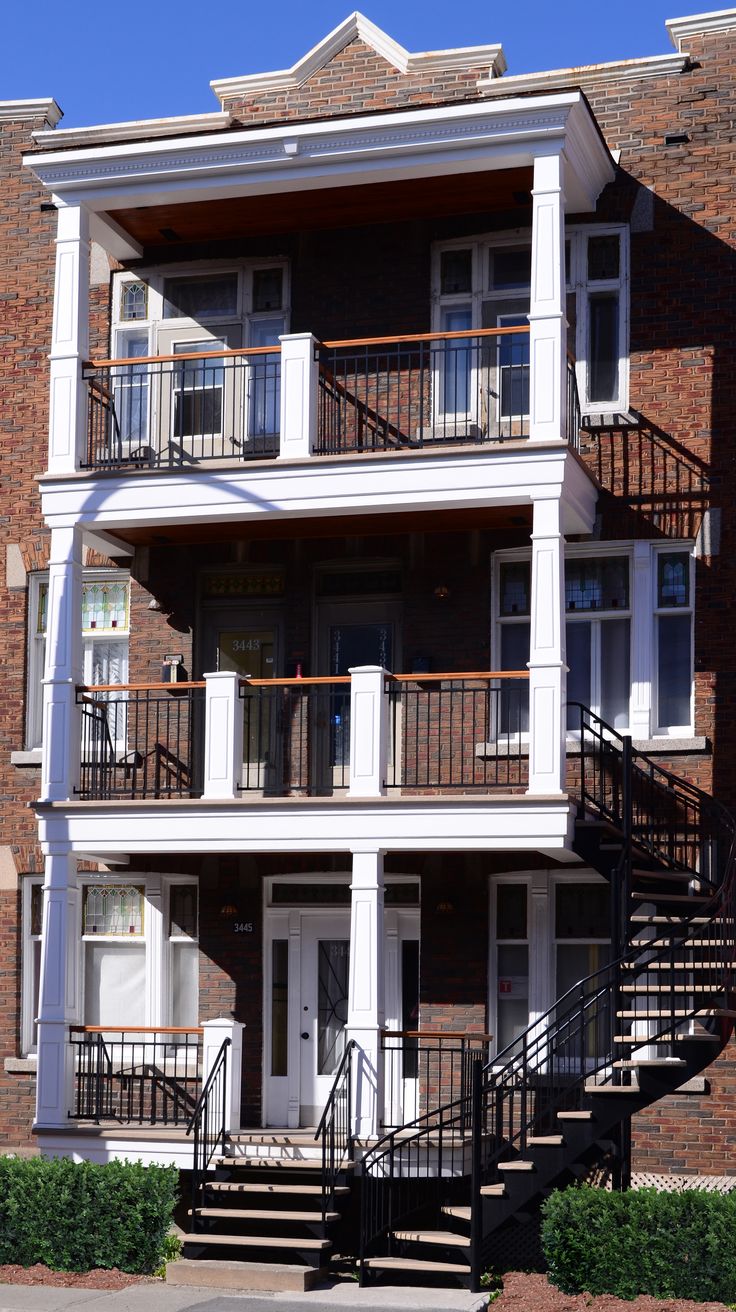
An infestation in a single-family home affects one owner, one budget, one decision. In a condo — whether a Montreal triplex, a Laval condo tower or a Brossard complex — the stakes multiply: responsibility is shared, pests travel between units, and legal obligations stack up.
With the gradual rollout of Law 16 (the act primarily framing building inspections and divided co-ownership, assented to December 11, 2019), Quebec condo boards have reinforced obligations for preventive maintenance. Pest control is part of it.
Legal framework: Law 16, maintenance log and contingency fund
Law 16 introduced three key obligations directly impacting pest management:
- The contingency fund study must now include all physical elements likely to generate significant costs — including corrective interventions on major infestations (bed bugs in multiple units, secondary water damage related to rodents).
- The mandatory maintenance log (article 1070.2 of the Civil Code of Quebec) must record all preventive and corrective interventions on the building. Pest management treatments are part of it: they must be documented (date, area treated, products used, technician).
- The building condition attestation (at the time of a unit sale) includes pest history. A board hiding a history of bed bugs or cockroaches exposes itself to lawsuits from misled buyers.
Bottom line: not having a documented pest management plan exposes the board to unit devaluation, civil lawsuits and refused sales by informed buyers.
The 5 most common pests in Montreal condos
Based on our team's interventions across Greater Montreal, here's the ranking of pests that cause the most issues in condos:
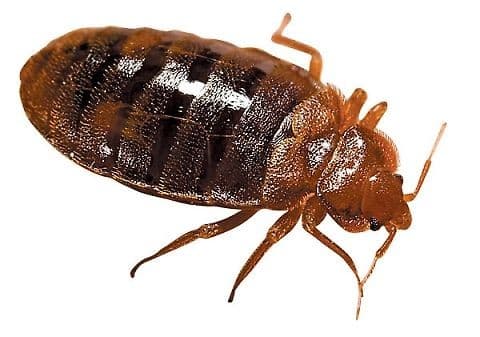
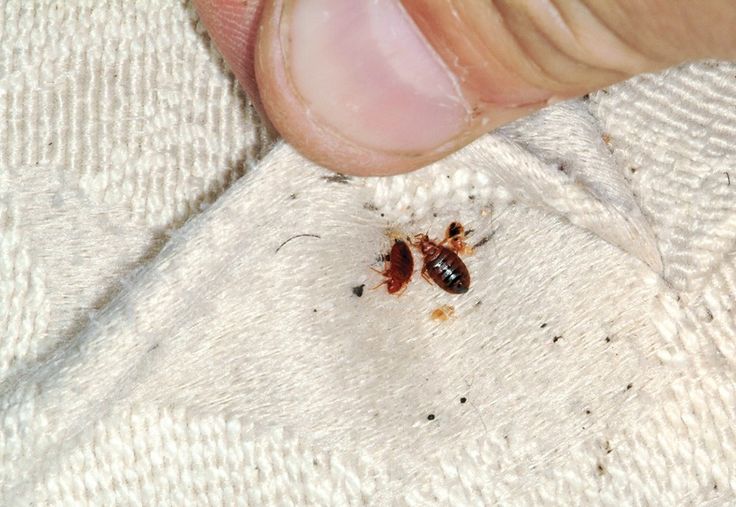
- Bed bugs — number-one issue in multi-units. They migrate between units via baseboards, electrical outlets and conduits. A late-detected infestation may require treating 6 to 12 neighbouring units.
- German cockroaches — travel vertically through shared plumbing risers. Very common in condo towers in Côte-des-Neiges, Parc-Extension and Saint-Léonard.
- Mice — enter through foundations, basements, ventilation ducts. Mostly affect older triplexes and duplexes in Plateau, Rosemont, Villeray.
- Carpenter ants — concerning for the building's structure. Common in condos with wooden balconies (Laval, Longueuil, Brossard).
- Pigeons and starlings — colonize rooftops, cornices and central AC units. Their droppings corrode materials and clog drains.
Who pays what? Common charges vs unit owner
This is the question that creates the most disputes in condos. The answer depends on the declaration of co-ownership and the type of infestation:
Board responsibility (common areas)
- Preventive inspection of the entire building
- Treatment of common areas: corridors, basement, garbage rooms, indoor parking, bike storage
- Inspection of plumbing risers and shared ducts
- Building envelope exclusion (sealing foundations, roof, soffits)
Unit owner responsibility (private portions)
- Treatment inside the unit when the source is private (infested furniture purchase, travel, etc.)
- Preparation of the premises (furniture, clothes, decluttering)
Grey zone: migration
If unit 301 has an infestation and units 201 and 401 are treated preventively, who pays? The declaration of co-ownership must specify. Otherwise, recommended practice is that preventive treatment of neighbouring units be covered by the board — they protect the building as a whole.
The unique challenge of condos: multi-unit coordination
To effectively treat an infestation in a building, you need cooperation from all occupants of at-risk units. That's where most treatments fail. Key steps:
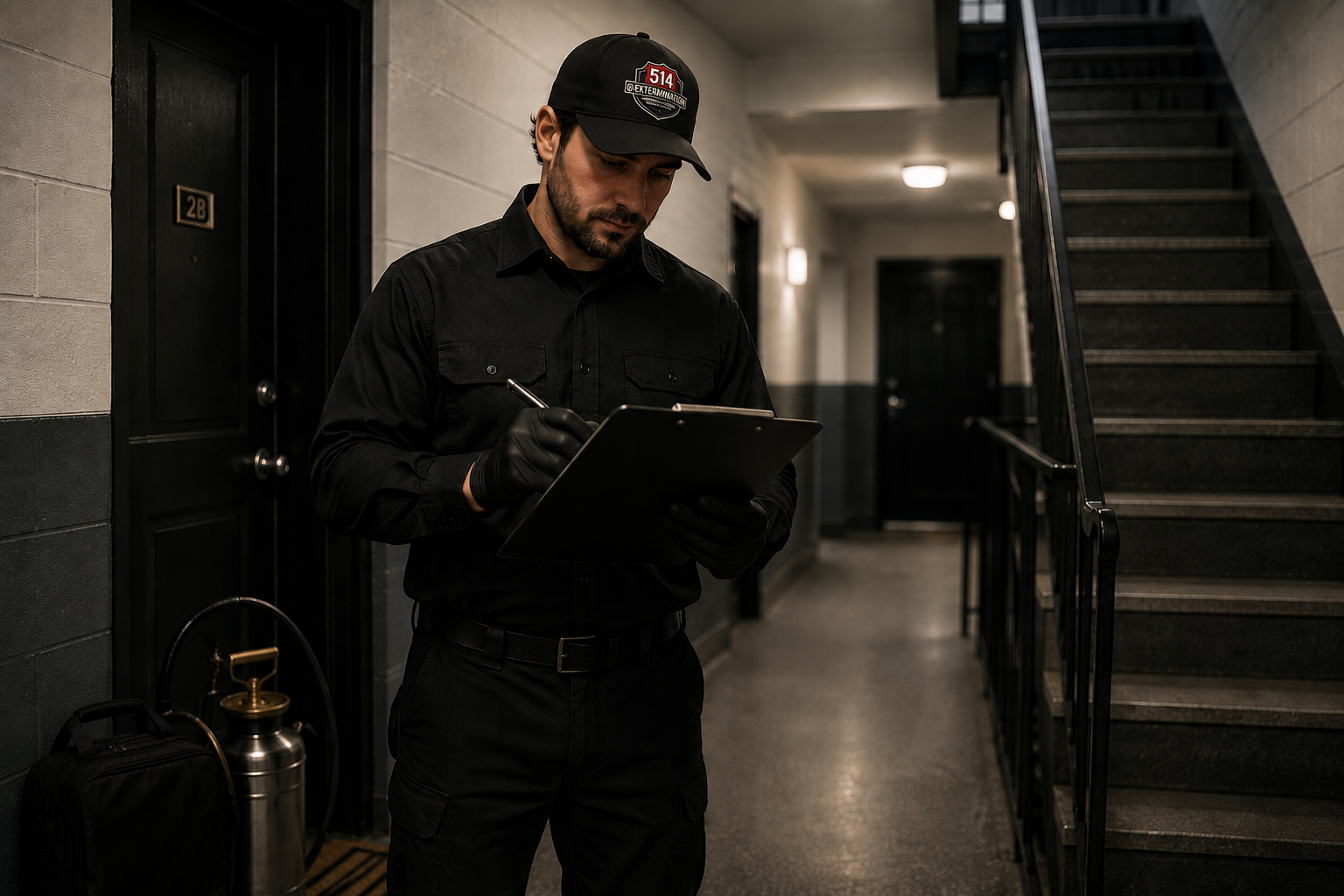
- Formal notice to owners/tenants with date, time, expected duration, preparation instructions (appendix of our quote).
- Inspection of adjacent units (at minimum side, above, and below neighbours for bed bugs).
- Simultaneous treatment of all units identified as infested or at risk — otherwise pests flee to untreated units.
- Premises preparation respected by occupants. Our team provides detailed sheets per species. For reluctant tenants, the declaration of co-ownership generally allows the board to enforce access (with 24-48 h notice).
- Documented follow-up: signed intervention report, before/after photos, scheduled next visits.
Why a preventive maintenance contract is profitable
Many boards only call an exterminator in emergency mode — when an infestation is already visible. That's the costliest approach. A preventive contract typically costs between $60 and $250 per month depending on building size, and includes:
- Quarterly or monthly inspections of common areas and sensitive spots
- Monitoring of perimeter bait stations
- Priority intervention and reduced emergency rate
- Inspection reports recordable in the maintenance log (Law 16)
- Exclusion recommendations (sealing, ventilation, etc.)

The ROI calculation
A bed bug infestation in a 12-unit building, untreated preventively, can cost between $8,000 and $25,000 to fix once spread. A preventive inspection contract on the same building costs about $1,800 per year. The math is obvious.
Our approach for boards and property managers
At 514 Extermination, we regularly work with condo boards, property managers and apartment building owners across Greater Montreal. Our approach:
- Free on-site quote — an expert technician visits the building, identifies risks and proposes a plan adapted to the building type (triplex, tower, complex).
- Clear, fixed pricing — monthly, bimonthly or quarterly contracts with guaranteed annual cost, no surprises.
- Coordination with property manager or superintendent — a single point of contact, off-peak scheduling, direct communication.
- Communication with owners/tenants — ready-to-send notice templates, preparation sheets by pest species.
- Law 16 compliant documentation — digital inspection reports, dated and signed, ready for the maintenance log.
- Total discretion — unmarked vehicle without logo, intervention in neutral professional outfits.
- Business billing — on organization account, with GST/QST numbers, NEQ 3382035833.
Frequently asked questions — condos and pest management
The most frequent questions we receive from our board and manager clients are in the FAQ section below. For an answer tailored to your specific situation, contact us directly.
Talk to an expert
Are you a board administrator, building manager or owner of a duplex/triplex? Request a free on-site assessment and a plan tailored to your building.
📞 Call us: (514) 835-2108
🌐 See our commercial services
🌐 Free online quote
514 Extermination — Condo pest management specialist in Montreal, Laval, Longueuil, Brossard, Terrebonne and the entire Greater Metropolitan area. NEQ 3382035833, Quebec CD5 certificate, insured business.
Frequently Asked Questions
Who is responsible for an infestation in a condo: the board or the unit owner?
Does Law 16 require a pest management plan?
How much does a preventive contract cost for a condo?
Should neighbouring units be treated even if they show no signs?
How to handle a tenant refusing access to their unit for treatment?
Need a professional exterminator?
Contact us for a free evaluation and a treatment plan tailored to your situation.