Fall Invaders: Why Insects Come Indoors in September and October
Every September, the same calls: "there are spiders everywhere" and "dozens of flies stuck to the attic window." Here is what is actually happening outside, which visitors deserve no treatment at all, and why the window for action closes at the first frost.

In brief
In Montreal, between late August and mid-October, several species look for shelter to overwinter and enter buildings through cracks, soffits and window frames. The main ones are the house spider, the cluster fly (the "fall flies" grouped on windows), the Asian lady beetle and the brown marmorated stink bug. None of these four breeds indoors, bites, stings or contaminates food: they are overwintering insects, not an infestation. The only effective treatment is a perimeter barrier applied outdoors before they enter, combined with sealing the openings. After the first frost it is too late: the ones that got in are already inside the walls.
What is happening outside in September
The trigger is not the cold, it is the light. As days shorten, a large number of insects enter diapause — a suspended-development state that lets them cross the winter. But diapause requires shelter: somewhere dry, out of the wind, where the temperature stays above the critical point.
In nature that shelter is loose bark, a hollow stump, a south-facing rock crevice. A heated building does exactly the same job, better. A brick façade facing southwest, which stores the late-afternoon sun, is a magnet for overwintering insects — that is where they gather before going in.
Cooling nights accelerate the movement. In Montreal, the first night below 10 °C generally triggers the wave, and most of the entries play out over three to four weeks.
The fall visitors, one by one
Spiders
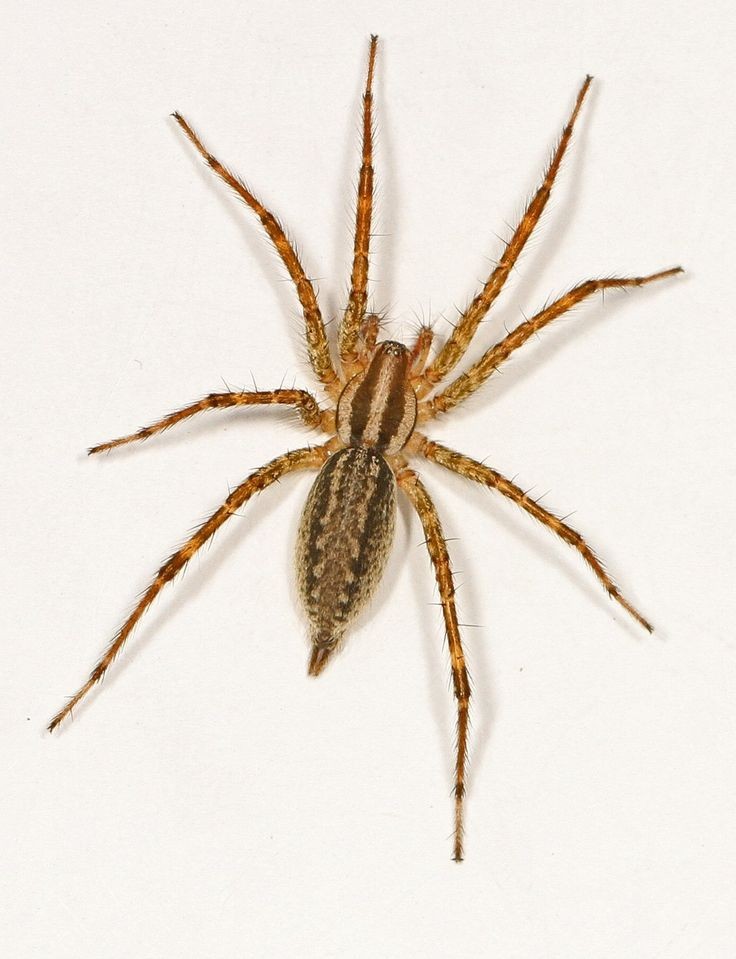
This is September's most frequent call, and it is almost always a misunderstanding. What people see is not an invasion from outside: it is mostly adult males searching for females, active at this time of year, roaming floors and walls instead of sitting in a web. They were already there. They simply became visible.
Two useful clarifications for Quebec: no spider species established here poses a serious danger to humans. Neither the brown recluse nor the black widow is established in Quebec. And a spider in a basement is an indicator: it eats insects, so numbers of them signal that there is something to eat — often a moisture problem feeding sowbugs and earwigs.
The cluster fly
These are the well-known "fall flies": slow flies, slightly larger than the house fly, with golden hairs on the thorax, gathering by the dozen on south- and west-facing windows and in attics.
Their cycle is unusual: the larvae parasitize earthworms in lawns. Nothing to do with household hygiene — an immaculate home will have just as many if it is bordered by grass. They do not lay indoors and do not contaminate food. Their only real flaw is coming back: during a January or March thaw, a few individuals wake up, leave the walls and end up in the living room.
The Asian lady beetle
Introduced to North America as a biological control agent against aphids, it has the same gregarious overwintering behaviour. You tell it from our native ladybugs by the M-shaped mark on the pronotum, just behind the head, and by its variable colour — pale orange to deep red, with zero to nineteen spots.
Two real nuisances: handled, it secretes a yellowish, foul-smelling fluid that stains light fabrics; and it can pinch skin, harmlessly.
The brown marmorated stink bug
A more recent arrival in Quebec, Halyomorpha halys is a shield-shaped, mottled brown insect about 17 mm long, recognizable by the alternating light and dark bands on the antennae and around the abdomen edge. It too overwinters indoors.
The practical instruction fits in one sentence: do not crush it. It releases a persistent rancid-coriander odour, and the smell attracts more individuals. Vacuum it, or catch it in a container. If you use a vacuum, empty the bag or canister outside immediately, or the odour will permeate the machine.
Earwigs, sowbugs and house centipedes
These are not looking to overwinter: they are looking for moisture, and they come in when the outdoors dries out or cools down. You find them in basements, under cardboard boxes sitting directly on the slab, in bathrooms. The house centipede — the fast, long-legged one — is a predator: it eats spiders, earwigs and larvae. Seeing it repeatedly signals there is a population to feed on.
For this group, an insecticide fixes nothing lasting. What fixes it is a dehumidifier, getting storage off the floor, and repairing water infiltration.
Late-season wasps
In late August and September, a wasp colony is at peak numbers and outdoor food is running out. Workers become markedly more aggressive and switch to sugar — hence their presence on patios and near garbage bins. The nest dies on its own at the first hard frost and is never reused the following year.
The practical consequence: a nest found in October somewhere nobody walks often warrants no intervention at all. A nest in a door frame, a soffit above a balcony, or a hedge you pass daily does. See our article on wasp nests in Montreal.
Mice
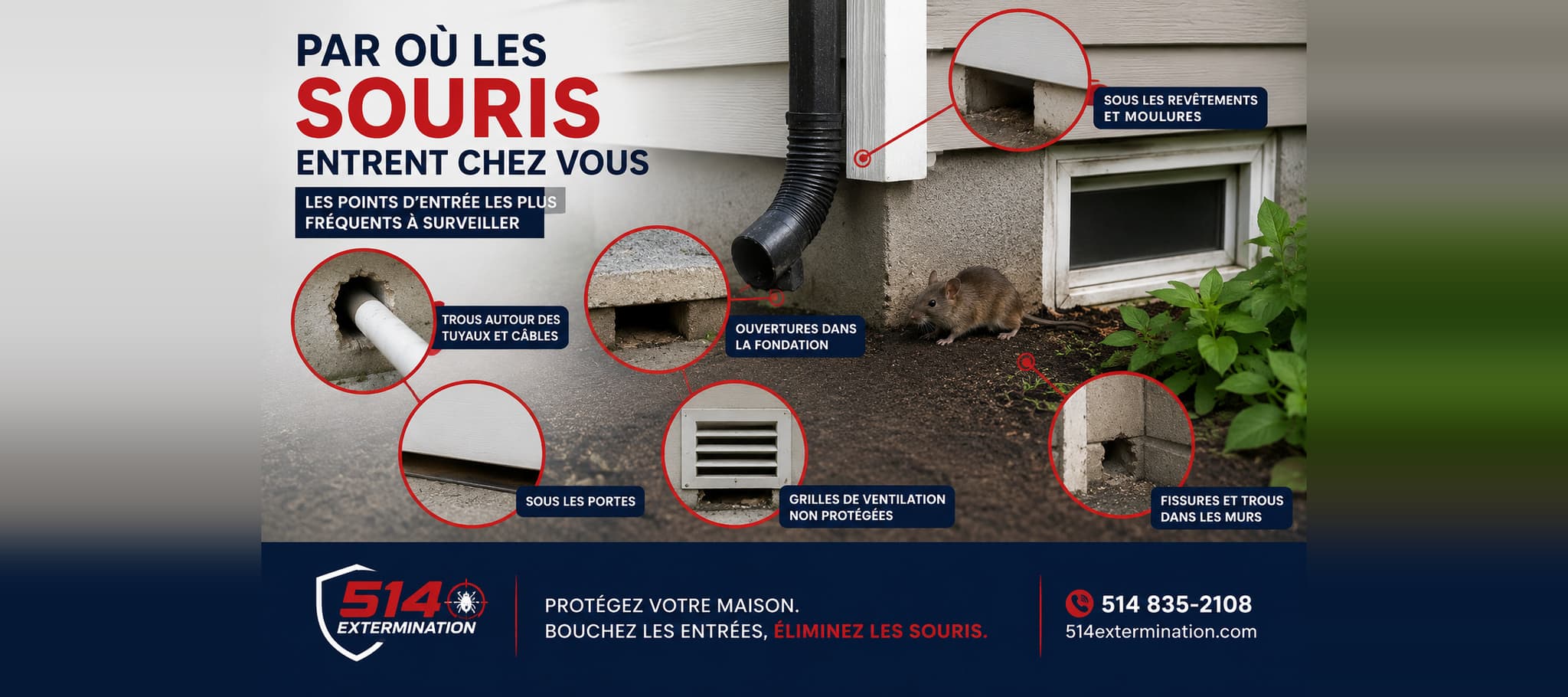
This is the only fall visitor that is a genuine health and structural problem, and also the one with the shortest window for action. A mouse gets through a 6 mm opening. It comes in during September and October, breeds indoors all winter, contaminates, and gnaws wiring. Nothing like a passive overwintering insect. Our article on mouse entry points details the six most common openings and the sealing method.
The distinction that matters: overwintering or infestation
This is the most useful sorting in the whole article, because it determines whether a treatment is worth paying for.
An overwintering insect comes from outside, does not breed in the building, does not feed indoors, and disappears in spring. Cluster flies, Asian lady beetles and marmorated stink bugs fall in this category. The number you see indoors will not grow on its own: it can only be renewed by new entries.
An infestation breeds on site and feeds on site. Mice, cockroaches, bed bugs, carpenter ants. The number rises by itself, and time works against you.
The mental test: if I seal the building perfectly today, does the problem die out on its own? For an overwintering insect, yes. For an infestation, no.
| Visitor | Breeds indoors? | What to do |
|---|---|---|
| Spiders | Marginally | Vacuum webs, treat the cause (moisture, prey) |
| Cluster flies | No | Sealing + outdoor barrier before entry |
| Asian lady beetles | No | Vacuum, do not crush, seal openings |
| Brown marmorated stink bug | No | Vacuum without crushing, empty bag outdoors |
| Earwigs, sowbugs | Rarely | Fix basement moisture |
| Mice | Yes | Professional intervention without delay |
Why the hardware-store aerosol changes nothing
The reflex is to spray indoors, on the window sill where the flies pile up. It kills the ones that are there. The next day there are just as many.
The reason is simple: entry is continuous. As long as the south façade stays warm and the openings stay open, new individuals arrive every day. Treating indoors is emptying a bathtub with the tap running. You have to close the tap.
There is a more serious problem in attics. If you treat the inside of an attic where hundreds of cluster flies are already settled, you get hundreds of dead insects in the insulation. Those carcasses then feed carpet beetles — beetles whose larvae attack textiles and furs in the rooms below. The remedy creates a second problem, harder than the first.
On this subject, our article on consumer insecticides details the other counterproductive effects of these products.
What works: act outside, and act early
Treating overwintering insects is one of the rare cases in pest management where the calendar matters more than the product. The same application three weeks too late achieves nothing.
The window: mid-August to early October
The perimeter barrier must be in place before the insects gather on the façade. In Montreal, that means the second half of August and September. An application made in November, once the insects are in the walls, has no purpose: they will only come back out in spring, from the inside.
Where the application goes
On the surfaces where insects land and gather, not everywhere: the upper part of south- and west-facing walls, around windows and doors, soffits, around vents and dryer outlets, the siding-to-foundation junction. That is what our preventive exterior treatment covers.
Sealing, which matters just as much
The product reduces the number of entries; sealing removes them. Points to check in September:
- Torn screens and windows that no longer close square.
- Worn door weatherstripping — if you can see daylight, an insect gets through.
- Unscreened soffits and roof vents: this is the main route cluster flies take into the attic.
- Dryer and range-hood outlets whose flap no longer closes.
- Cracked caulking around window frames, and wire and pipe penetrations.
- The siding-to-foundation junction, often open over several metres.
A field tip: do this inspection on a sunny September day, in late afternoon. The insects will be gathered on the warm façade, and they show you where the entry points are. You only have to look at where they concentrate.
The special case of attics
If cluster flies come back every winter in your house, the attic is almost always the cause. They form clusters in the insulation and under the roof deck.
What wakes them in January is not the heat of the house — it is a thaw. A few days above freezing are enough to revive part of the cluster. The insects then seek light, which leads them downward: recessed light fixtures, the access hatch surround, ventilation registers. They emerge into the living room in midwinter, to everyone's astonishment.
The underlying fix is twofold: screen the roof vents and soffits with fine mesh, and seal the ceiling penetrations between the attic and the living space — around recessed fixtures, the access hatch, duct passages. The second step does not remove the presence in the attic, but it removes the appearances in the living room.
What we do not treat
We prefer to say it plainly, because it saves a pointless visit.
We do not treat indoors for isolated spiders. A few spiders in a basement do not justify insecticide. A vacuum is enough, and if there are many, it is the moisture and the prey that need treating, not the spiders.
We do not treat the inside of an attic already colonized by cluster flies, for the reason explained above: carcasses in the insulation attract carpet beetles. We work on the exterior and on sealing.
We do not destroy a wasp nest that poses no traffic risk in October. It dies at frost. Note also that no guarantee applies to wasp nests: next year's founding queen may settle elsewhere on the building, and that is not a matter of the previous treatment.
What we do treat in September: the exterior perimeter barrier against overwintering insects, mice before they spend the winter breeding in the walls, and wasp nests in traffic areas.
To do this month
A short checklist, in order of effectiveness:
- Walk around the building on a sunny afternoon and spot the façades where insects gather.
- Replace weatherstripping that lets daylight through and repair screens.
- Screen roof vents and soffits if it has not been done.
- Have the perimeter barrier applied before the end of September.
- For what is already inside: vacuum, do not crush, and empty the vacuum outdoors.
For a free price estimate or a service call in Montreal, Laval, the South Shore or the North Shore, call us at (514) 835-2108. The on-site inspection is billed and deducted from the price of the treatment if you go ahead.
Frequently Asked Questions
Why are there so many spiders in the house in September?
What are these slow flies clustering on my windows in the fall?
Should you treat against insects that come in to overwinter?
How do you identify the brown marmorated stink bug, and what should you do?
Why do flies come out of the walls in the middle of January?
Are wasps more aggressive in September?
Need a professional exterminator?
Contact us for a free evaluation and a treatment plan tailored to your situation.