
Insects
Carpenter Ant
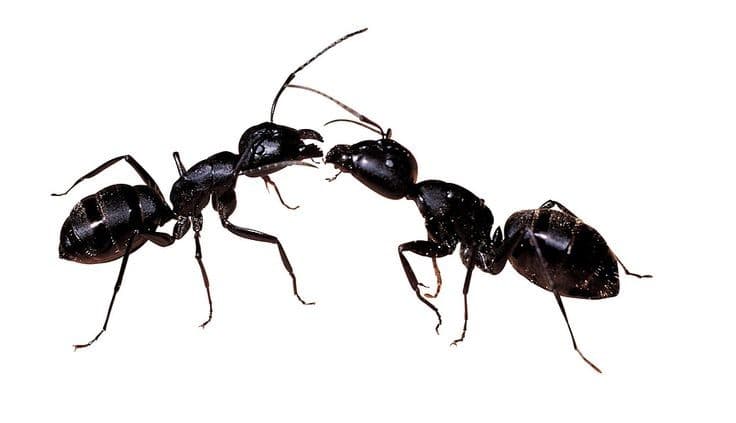
The carpenter ant excavates galleries in wood to establish its nest. It can cause significant structural damage to Montreal buildings.
Active infestation? Don't wait — a certified technician responds within 4 hours, 24/7.
How to identify
Large black or reddish-brown ant with a smooth arched thorax. Winged individuals appear in spring.
Typical habitat
Damp or damaged wood: framing, beams, window frames, decks. Also in dead trees near houses.
Health risks
Carpenter ants don't transmit diseases, but they can cause major structural damage that compromises building integrity. Repairs are often very costly.
The complete guide
Carpenter ants? Every week counts.
They continuously tunnel through your home's wood. The longer you wait, the greater the damage — and the bill. Fast inspection, guaranteed treatment.
📞 Call (514) 835-2108What is a carpenter ant?
The carpenter ant (Camponotus) is the largest ant found in Quebec homes. Contrary to popular belief, it doesn't eat wood: it excavates it to build smooth galleries for its colony. Damp, softened or damaged wood attracts it first — hence its direct link to moisture and ventilation problems.
Several species live in Quebec. The most common is black, but some are two-toned (black and reddish-brown). It's sometimes confused with the field ant, but its large size and smooth rounded thorax set it apart.
Life cycle and colony growth
Understanding the life cycle explains why you must act fast:
- The queen can live up to 15-25 years and lays continuously.
- A colony starts from a single queen and reaches about 2,000 individuals in 3 years, sometimes far more at maturity.
- Eggs hatch in about 60 days (egg → larva → pupa → adult).
- In spring, a mature colony produces winged individuals (swarming) that leave to found new colonies. Seeing winged ants indoors is an alarm signal: the nest is already well established, often in the structure itself.
As long as the queen is alive, killing visible workers solves nothing: the colony rebuilds.
Main nests and satellite nests
This is what makes this ant so hard to eliminate yourself. The colony organizes into two nest types:
- The main (parent) nest: houses the queen, eggs and young larvae. It needs moisture and is often outdoors (stump, dead tree, rotten wood) or in a damp area of the building.
- The satellite nests: workers, pupae and mature larvae settle in drier areas — walls, insulation, ceiling voids, door frames. A satellite nest can be up to a hundred metres from the main nest.
The result: you can destroy a visible nest and still see activity, because the parent nest (and queen) is elsewhere. That's why a complete inspection and a treatment targeting the whole colony are essential.
Carpenter ant or termite? The difference
They're often confused, but treatment differs:
- The carpenter ant excavates wood without eating it: its galleries are smooth and clean, and it pushes out fine sawdust (frass) mixed with insect debris.
- The termite eats wood: its galleries are filled with mud/soil and it is very rare in Quebec (the cold climate is unfavourable).
In Quebec, virtually all cases of "excavated wood" are carpenter ants, not termites.
The damage: why you shouldn't wait
An active colony continuously excavates new galleries. Over time this weakens structural elements: beams, joists, studs, frames. In advanced cases, repairs (structural wood replacement, rebuilding) can cost thousands of dollars.
At resale, undisclosed carpenter-ant damage can even constitute a hidden defect. The longer the infestation lasts, the greater the damage — and the bill. Acting at the first signs is by far the cheapest option.
Why home treatments often fail
Store sprays, boric acid, essential oils: these kill a few workers but reach neither the queen nor the satellite nests. Worse, some repellent sprays push the colony to split (stress budding), creating several foci instead of one.
Without precisely locating the main nest and correcting the moisture source, the infestation returns season after season.
Our professional method
At 514 Extermination, we treat the colony at its source:
- Complete inspection: spotting galleries, frass, entry points and damp zones; locating the parent nest and satellites.
- Bait treatment that workers carry back to the queen — this is what eliminates the entire colony.
- Targeted treatment of galleries and entry points.
- Exterior preventive barrier to block recolonization.
- Exclusion recommendations: fixing moisture, replacing damaged wood, sealing.
- Written guarantee, Health Canada approved products, CD5-certified technicians.
Frequently Asked Questions
Do carpenter ants eat wood like termites?
Why do I keep seeing ants after destroying a nest?
Are winged ants indoors a serious sign?
What damage can carpenter ants cause?
How do I prevent a carpenter ant infestation?
What our clients say
« Quick response and detailed explanation of the work being carried out. It was a pleasant experience in general. Thanks. »
« They were professional and responded quickly. I feel at ease now! »
« They got a good sense of humour. I liked them. Especially the one with glasses »
Carpenter Ant problem? We respond within 4 hours
Montreal, Laval, South Shore, North Shore. Written guarantee, certified technician, unmarked vehicle.
PRACTICAL GUIDES
Before and after your treatment
Good preparation doubles treatment effectiveness, and knowing what to watch for afterward saves a lot of worry.
Ants exterminator by area — Greater Montreal, Laval, South Shore
Other similar pests
Bed Bug
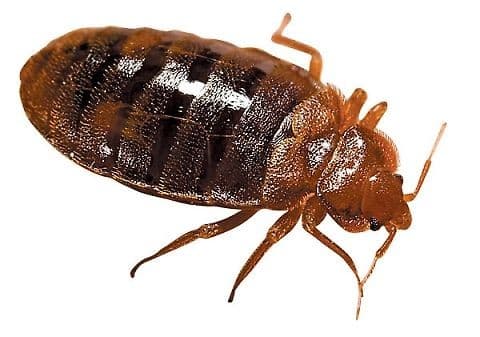
The bed bug is a parasitic insect that feeds on human blood during sleep. Montreal is one of the most affected cities in Canada.
Cockroach
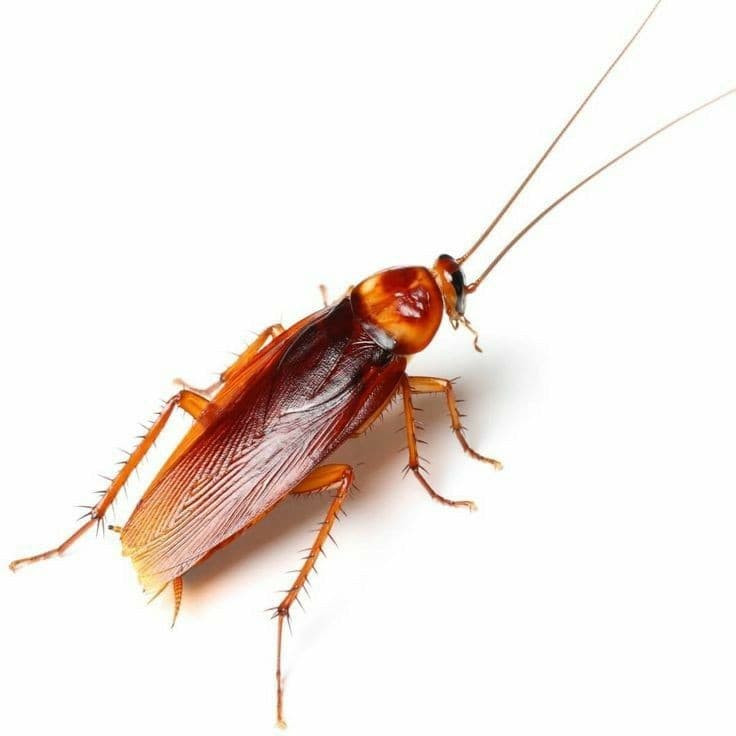
Cockroaches are extremely resilient nocturnal insects. They reproduce quickly and can infest an entire building within weeks.
American Cockroach
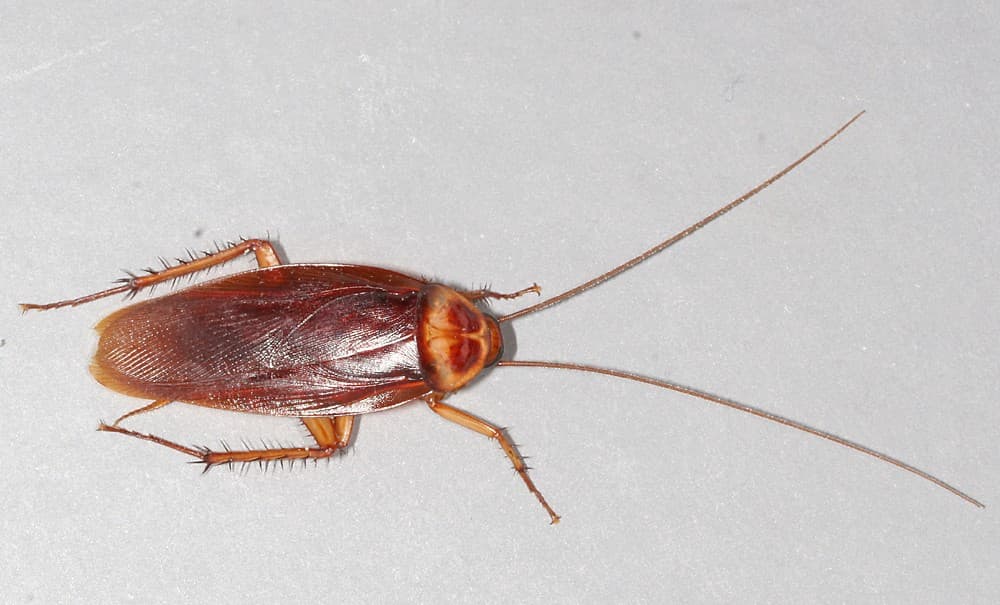
The American cockroach (Periplaneta americana) is the largest cockroach found in buildings: the adult reaches nearly 40 mm. It seeks heat and moisture, and thrives mainly in basements, boiler rooms, sewers and commercial kitchens in Montreal.